'EVERYONE'S A STAR!' / 5 SECONDS OF SUMMER: REVIEW


by anne-elise tidwell

“Good things come to those who wait,” a line from one of 5 Seconds of Summer’s newest singles, “Boyband,” holds true. After months of ominous Instagram posts, side quests, and teasing fans with the word “soon,” the band is back with their sixth studio album, EVERYONE’S A STAR!

After taking time off to pursue solo endeavors, the band reconvened and created what lead singer Luke Hemmings is calling the best music of their whole lives.

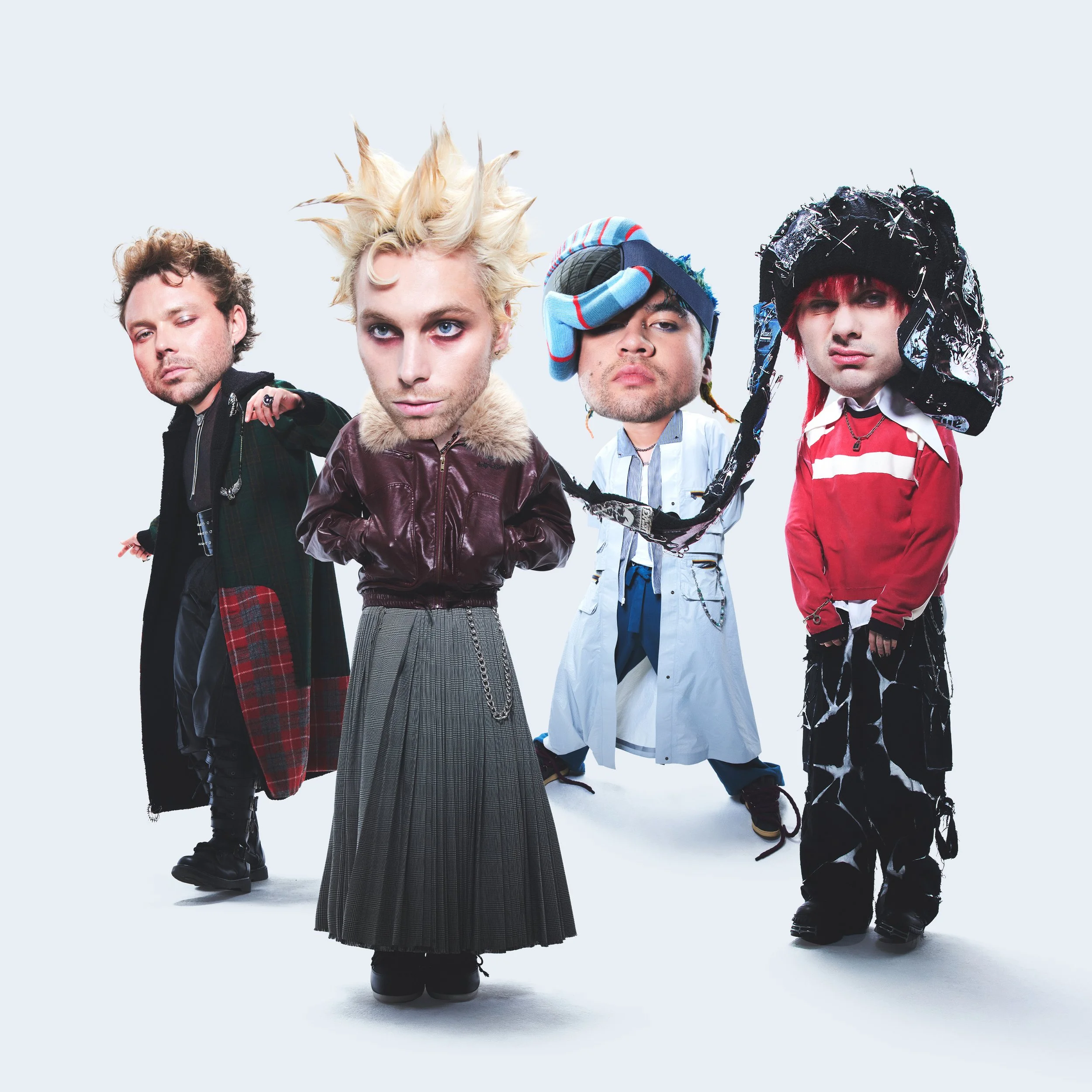
The Australian pop-rock band began the new era earlier this fall with a new label, a fresh bottle of hair dye and their spunky lead single, “NOT OK,” captivating their audience with a spontaneous pop-up performance in Los Angeles to celebrate the record’s announcement.

EVERYONE’S A STAR! confidently embraces the boy band moniker they once rejected, and delivers a mature, introspective commentary on their 15-year career. The record grapples with the “shadow side” of the industry’s glittery facade, exploring themes tied to the disposable nature of stardom.

“To still be friends, and to still [be] doing s*** like this is pretty amazing,” Hemmings said at the 5SOS Press Conference in Melbourne.

Conceptually, EVERYONE’S A STAR! is presented like a performance art piece and stands as the group’s most thematically driven and ambitious project to date. This album’s rollout has showcased 5SOS’s innate ability to outwardly poke fun at the concept of a boy band, while also taking themselves and their artistry seriously.

“If a boy band is what we are, then we are going to do it in the best way possible,” guitarist Michael Clifford said in a promotional interview.

The record is a sonic journey and an honest testament to the band’s versatile craftsmanship. It begins with hypnotic, atmospheric sounds in the song “Everyone’s A Star!,” impeccably setting the tone for the rest of the record. It also naturally delves into heavier, hard-hitting rock influences, akin to early Paramore, that can be heard on tracks like “The Rocks.”

Through over-the-top stunts, the album's narrative is able to extend well beyond the music itself and pushes the boundaries of the record's creative direction. Dramatic entrances in obnoxious pink limos; performances inside giant plastic-wrapped toy boxes; and a comical, tabloid-esque media outlet the band created called “The Daily Sauce” all serve as audacious promotional tactics and integral pieces of the record’s larger commentary on fame and identity.

The record is not only sonically well-rounded, but lyrically profound, self-reflective and personal. The pre-chorus of “Boyband” articulates the band’s insight well. The song references many facets that come along with being in the public eye, including a lack of autonomy, constant and inescapable scrutiny, and intense pressure to appease a parasocial audience.

“Boy in a boyband / make that monkey dance / let me see you clap your hands / it’s your favorite boyband.”

Their creative direction is seemingly boundless and can be pushed as far as the band is willing to go. They said their upcoming EVERYONE’S A STAR! world tour “truly encompasses” the over-the-top concept, leaning more into a theatrical performance than a traditional concert. The group compared the tour’s production scale to a Lady Gaga or AC/DC show.

The European leg of the tour is set to start March 2026 in Belfast, UK with North American and Oceania following shortly after and will conclude in Perth, Australia next November.


'WHISTLING PIE' / MITCH ROWLAND: REVIEW


by olivia powell

Mitch Rowland’s sophomore album Whistling Pie is a timeless testament to dichotomies. It’s a cohesive patchwork of sentiments, mostly those that inevitably come along with being a father and husband in an ever-evolving life, all sewn together to form a vignette of his story. His first album Come June successfully achieved the goal of any debut album, setting the stage for who Mitch Rowland is apart from being Harry Styles’ guitarist (a standout one at that). Now, time has gone on and time itself is the thing to treasure. It could easily be made frenetic, but instead takes on a rather contemplative and self-aware energy. The album begins with “Cabin,” an instrumental piece of tone-setting music, that leaves the words for track two. These moments without lyrics give the words he sings more weight. Each word sounds intentional and rife with meaning. It’s contemplative, even when expressing contrasting feelings. 

The influence of artists like Elliot Smith is apparent on whispered, close-mic’d songs like “One In One Out,” and “Honeybabe.” The former track establishes a sonic tension that exists through the album. Rowland’s occasional use of lilting vocals creates a sense of unpredictability mirrored in the lyrics themselves; lines like “moldy apple of my eye” are an unexpected twist on a sweet cliché. Often ambiguous, the interpretation is somewhat open. On “Take 2” and “You Could (Be Good)” the lyrics from the previous song “you can do anything,” become “you can be anything” on the latter, in an ode to family and his wife. It has the softness of a Jack Johnson song, with guitar riffs that brightly sound like a call-and-response. 

There often seem to be two ways to interpret one song. “Nothing Is True” may seem titled to reflect some kind of despair, but by the song’s conclusion, the phrase sounds more like a mantra. It’s a suitable example of the album’s theme, which is one of making peace or at least comfort with the way things are. The songs themselves are comforting, fitting for the countryside where they were created. Though it could be best described as a folk album, there are surprises in store. The use of a drum machine on “Do It For Real” adds a DIY texture to the song. Instrumental interlude “Carrot & Wine” features a reversed guitar, brief enough to pique interest and short enough to segue from the previous track. The local grocery mart that inspired the track’s title is a wholesome reference for his family. 

The psychedelic rock edge that Harry Styles fans have come to love on songs like Styles’ “She” (Rowland solos) makes an appearance in folk form on “Take Two,” then again in full-force on “Carry On With Your Tea.” Starting off soft as a lullaby, the guitar soon strums in heavy. An electric guitar solo adds some grit, while building to the ending lyric, “it will all come back to me someday.” That sense of blues-guitar confidence continues on through “Honeybabe,” a nostalgic tune with a bit of quirky darkness reflected in the music video, wherein a mostly stone-faced Rowland witnesses a woman killing her cheating husband. It contains the same sure-footed storytelling as any classic country song. A steady beat anchors “Standard Size Knife" as the album’s closing track, which feels a bit like the end credits to a coming-of-age film. As the credits roll, a genuine glimpse of Rowland’s narrative has been shown to those who have listened. It ends sounding hopeful in saying “I try,” while simultaneously questioning “are we dying alone.” On Whistling Pie, Mitch Rowland has shared the things he’s still questioning, giving the rest over to time.


'BUG' / ALIX PAGE: REVIEW


by alicia urrea

As springtime rolls in on the West Coast, indie singer-songwriter Alix Page emerges in full bloom with her newest EP titled Bug. Across all six songs on the project, there is delicacy in the way Page is lyrically intimate and allows her pen to spill over like a love letter (literally, and metaphorically). There’s a story written in each track, exploring the tenderness and complexities of falling in love with someone new.

Like the season of spring, Bug is transitional. It’s a contrast from her previous work on Goose, which was almost like a coming-of-age movie soundtrack. It was the perfect mixture of blazing alternative-indie production and crestfallen ballads, all while dissecting the complicated experiences of getting older; whether it was nostalgia for adolescent years, getting your heart broken by a first love, or the euphoria that comes with finding your other half, Page’s sophomore EP was the soundtrack to growing pains. With her third EP, we’re witnessing the continued metamorphosis of Alix Page — both in her artistic sound and in the personal life experiences that shape it. This time, the transformation feels softer and more sentimental, rooted in the lush emotions that come with new love.

A lot of the internet has coined the term “Lover era” to mean someone is infatuated with someone else, overall feeling dreamy and whimsical with a lust for life and a relationship (in reference to the open-hearted, glowy album by Taylor Swift). I feel it’s appropriate to say Bug is Page’s “Lover era,” especially since we were first introduced to this new aesthetic with the release of the first single, “Girlfriend.” Sitting as the second track on the EP, it’s a simple yet beautiful track that seems to encapsulate the entire project thematically. The lyrics discuss the intense stage of limerence, when you begin to experience intense emotions for someone and hope that those feelings are reciprocated. Page lays all her cards flat in this song, singing phrases like “I could be the caffeine waking you up / Just pour a little more of me into your cup / Yeah, I could be whatever you want” harmonizing alongside herself and a crisp acoustic guitar, faint percussion, and a subtle distorted electric guitar.

The placement of “Girlfriend” is interesting yet suitable, considering the track that comes before is called “Break The Band Up.” Whenever addressing the song on social media, Page has always poked fun at the fact that the title sincerely speaks for itself: the song is about breaking the band up. It’s a genuine favorite of mine if I had to choose one track on the EP. Though the lyrics are simplistic, they’re vulnerable. The instrumentals are also illuminating, almost as if they are highlighting and emphasizing Page’s plea in the chorus: “I would have loved you, but I just got tired of it / You put another hand up, I go and break the band up.” It’s additionally just an amazing juxtaposition, because a whole band is evidently playing with her although they are seemingly… broken up.

The third track is the cutest little thing… and the title track! “Bug” has taken on so many different meanings among her fanbase, which has been heartwarming to see. The song is as effortless as Page’s angelic vocals with some warm acoustic chords, addressing someone sensitively throughout the first verse: “Hey, Bug / How do you feel, Bug? / You know there’s nothing you should feel like you can’t tell me.” Many fans have taken to social media to share photos of themselves as kids using the first verse of “Bug” as the audio, empathizing with the lyrics in a way that feels like a love letter to their younger selves. Page herself has shared the same vulnerability with this title track and its announcement, even making the cover of the EP a baby photo of herself. She even took to Instagram to say: “[Bug] is a love song in lots of ways but it’s mostly for little tiny baby me.”

“Sweet” is the song that follows, which is another personal favorite of mine. Despite its bright instrumentation and enticing title, the lyrics are vastly blue. The chorus speaks for itself, taking accountability for a form of self-sabotaging in a relationship. Page sings about waking up and “starting problems,” sitting back and letting her partner solve every single one of them. She finishes off her openness by stating, “Did you ever get exhausted? / Of being nothing but sweet to me.” It’s the kind of song that will have you crying while you’re dancing. As someone who had heard this song live at Page’s headlining show in Santa Ana back in November, I was hypnotized by the upbeat music and the “sweet to me” motif. I never would’ve guessed how genuinely gloomy the lyricism would be. Nonetheless, it’s a mesmerizing track that showcases the difficulty that comes with recognizing faults in a relationship that might’ve been one-sided.

The last two songs — titled “Prank Call” and “Bb” (pronounced B flat) — are on the more somber side. “Prank Call” is definitely a relatable one to me, and feels like a manuscript of all of the thoughts I’ve ever had while in a relationship. “Prank Call” is the translation of anyone who has ever experienced abandonment anxiety. This song is so Phoebe Bridgers-esque, which gives such a wistful feeling for the older parts of Page’s discography. Though “Prank Call” is pessimistic about the future of this relationship, “Bb” is a stark comparison. This song is more hopeful about the longevity of this romance, though it keeps that stripped-back feel with its instrumentation. Similarly to “Bug” and “Prank Call,” it’s simply Page’s vocals with clean and soft acoustic guitar chords. The song shares some affectionate lines, including “Now your shirt's on my bedroom floor / Your hands around my waistline / I could do this for a long time / Can't even say goodbyе” in the fourth verse. “Bb” brings Bug full circle — instead of ending with heartbreak, it presents a small sense of longing and an intimacy that will linger for an indefinite amount of time.

Overall, Bug has effortlessly captured what it means to be lovestruck. Vulnerability is carefully weaved into each song, and it is proudly worn. Page has allowed herself to feel the spectrum of emotions of what it means to fall in love: it’s messy, it’s giddy, and it is comfortable, all at the same time. Bug may be her “Lover era,” but it is also an era for growth and maturity in womanhood and emotional intelligence. With this EP, Page essentially invites us to take a look into her diary, with some tender and personal thoughts spoken throughout. It has also unintentionally established her as an artist who isn’t necessarily afraid to be transparent and feel complex emotions, and instead turns those thoughts into art and into projects that can be absorbed sincerely.


'PERSONA' / HALF•ALIVE: REVIEW


by olivia powell

While it may seem evident from the title, half•alive’s new album Persona embodies a core element of music — humanity. The humans behind the band include lead singer Josh Taylor, drummer Brett Kramer, and bassist J. Tyler Johnson, whose combined artistry proves to be enduringly genuine. The opening title track itself hints at the sonic stability and measured chaos to follow. With frenetic synths, the kind of chaos that exists in humanity is something half•alive manages to convey in subsequent songs like “Automatic.” After the thirty-two second title track (it’s short, but certainly not a skip), “Sophie’s House” follows after with a steady beat. It could easily be taken for granted, the kind of groovy foundation of drums and guitar that half•alive builds with each song. It quickly became clear to me that their dynamic range is a part of the sound; the contrast between verses and choruses is often sonically drastic, but doesn’t feel jarring either. It’s an album sure to captivate crowds, and casual listeners who simply can’t resist a good beat. To say the least, hearing this piece of art live would certainly be incredible.

In listening to Persona all the way through, the song I was most excited to replay was “Bleed It Out.” Not only did I get chills on the first listen, but the thoughtful lyrics and production may just be my favorite on the album. It’s a sound that feels somewhat reminiscent of 2010’s electronic pop, while still reinventing itself with distorted guitar and shouted refrains of “bleed it out!” Choruses like this one soar. It’s a kind of freeing appeal to listen to your heart, while still lyrically maintaining an ambiguity left up to the interpretation of the listener. “People” contemplates the idea of sonder (the realization that every human has their own lives and personal experiences), while synthesizers and vocal layers create a lush soundscape leading into the second chorus. It’s artfully crafted, and so clearly full of intentional lyrics and sound dynamics. I know it's a song I’ll be analyzing for some time to come.

It’s a delicate balance to be able to write impactful “bangers,” as well as down-tempo songs. A perfect example of this kind of balance is on “Long Drive” with Kacy Hill, where her vocals are a match that just seems to make sense. The song’s ending picks up a bit, with the addition of horns (possibly my favorite part) and more drums, easing back into the upbeat “Lie, Lie.” Other slower songs like the Jordana-featured single “Songs,” and closer track “Thank You,” don’t feel out of place on this album. It’s not an album that could be described with one genre, in the same way that humanity can’t be described by one emotion. Persona holds room for the complexity of the human experience, while providing consistently solid music. 

The chorus of “All My Love (Imperative)” feels meaningfully repetitive, with a shimmering choir echoing the phrase each time. The song doesn’t just tell you “I’ll give you all my love,” but also sounds light, airy, and infectious. Elements like jazzy horns, and pluck-aided drum breaks like the one in “The Point” really make Persona stand out. The more I listen to Persona, the more I catch. Every song is a playground of sound, with little riffs between phrases or subtle basslines, without ever feeling unnecessarily crowded. It’s an accomplished culmination of eleven songs, each one different in a unique way. The album concludes with a grateful “Thank You,” which ends with a singular guitar strum. I love simple moments like this almost as much as the high-energy ones, because it’s a mark of the feat half•alive has accomplished. That final strum feels like a simple closer after wowing an audience with everything they’ve got.


'SAD SONG' / P1HARMONY: REVIEW


by martina rexrode

After a successful run with their first full-length album 때깔 (Killin’ It) which brought them their first Korean music show win, #1 on the Billboard World Albums chart, and #2 on the Billboard Top Album Sales chart, P1Harmony is back with their seventh mini album SAD SONG. The seven track mini album touches on topics and situations like the feeling of being stuck, rewarding yourself for pushing through tough times, and the shyness that comes with first love. It also covers a wide range of genres, similar to their last album, and showcases new sides of every member on each song.

The title track, stylized as “SAD SONG,” is a classic musical juxtaposition of melancholic lyrics hidden among high energy instrumentals and vocals. In the pre-chorus, leader and main vocalist Keeho sings, “I try to get away, loneliness stuck in my heart, oh, no, sad song puts me in a prison.” In the English version at the end of the album, he sings, “I try to get away, I'm stuck in this loneliness, I can't get out of sad songs, just locked up in here.” Both versions of this section reach the core of the song’s message, but it's easy to get lost in the fun of the execution that you don’t even register what they're singing until you actively read the lyrics.

The addictive piano riff adds flare to an already catchy song, pairing well with the quick-witted raps and layered vocals. Intak’s gritty tone stands out while Jongseob’s smooth flow only helps to solidify his reputation as one of the most exciting rappers within his generation of the genre. Keeho and Theo’s ever-present soulful vocal style somehow fits into every type of music the group tries, and this is no exception. (Their final harmony during the bridge is sure to leave your arms covered in goosebumps.) As usual, the combination this group brings of vocalists, rappers, and synchronized dancers comes together to create an energetic track without the TikTok bait dozens of K-pop groups and Western artists have started to lean into.

The b-sides on SAD SONG explore different genres and familiar sounds to anyone who’s a fan of 2010 American pop music. For example, “Last Call,” the third track, felt extremely reminiscent of Big Time Rush or Up All Night-era One Direction. The shouty chorus, quiet lines of dialogue within the verses, and funky electric guitar throughout were a charmingly nostalgic nod to American and English boy bands popular when the P1Harmony members and many of their fans were growing up. Another favorite is the sweet fifth track “All You.” Touching on the relatable feelings of shyness and uncertainty surrounding a confession of love, “All You” is a track driven by piano and 90s R&B elements which fill it with a youthful air that’s very easy to listen to.

The rest of the tracks fell to the wayside a bit on the first handful of listens with their instrumentations and deliveries feeling pretty familiar to songs on their previous album, but “WASP,” the group’s first unit track between rappers Intak and Jongseob, holds some potential for expansion. They aimed for a 2016/2017 American rap style, and they delivered that perfectly. However, the chorus sections felt too empty and repetitive where the group as a whole typically brings those sections to full, bright life. It’s a cool concept and a new style for both of them, but not enough to truly showcase their range to the ability they made present on the rest of the mini album.

Every time P1Harmony comes back to release a new project, it’s guaranteed to be something new. From their debut in 2020 to now, they’ve provided a refreshing sound in an industry where everyone is constantly trying to be the next big thing. Their energy feels genuine and the songwriting talents of their rappers should not go unnoticed. With SAD SONG, they’re sure to keep the trajectory of their success moving upward.