
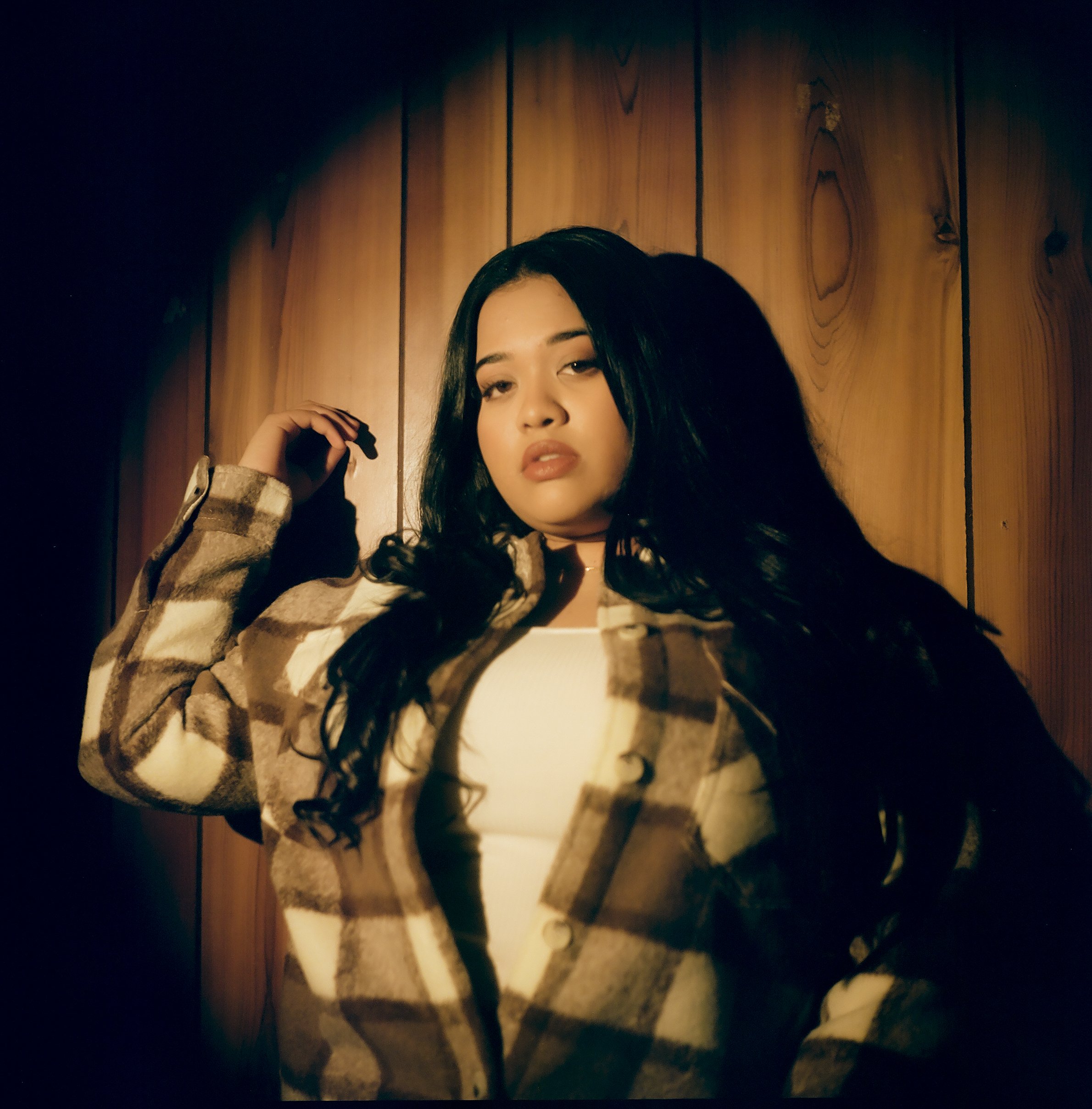
BENITA: INTERVIEW


by alex grainger

photo courtesy of benita

Benita, who has proven herself able to repeatedly empower listeners through her alluring bops, releases The Other Side Through The Hills, a delicate, smooth, and raw story allowing her to “share something from [her] soul to another that may need it.” We’re graciously brought into the depths of her mind through a two-pack of thematic foils narrating an “intimate exploration of loneliness, discouragement, and hope.” Although “The Other Side” is a ballad of autopilot numbness and detachment written during the waning fall months, Benita ends the two-part story on a note of optimism as “Through The Hills” is a spring wakeup to not wasting anymore time.

The Other Side Through The Hills is a genuine effort of courage and connection. The Toronto based songstress is not only pushing the boundaries of the cities culture but also pushing boundaries within herself as this project gave her a sense of comfort in “peeling back the layers,” as well as “awareness of what [she] can do lyrically.”  The Other Side Through The Hills is Benita’s first release of the year and is an invitation to cinematic sounds and sonic depth we can expect in the coming months. Read more about Benita and The Other Side Through The Hills below!

The Other Side Through The Hills covers mental health and explores loneliness, discouragement, and hope. Can you share a little more about the story and deeper meaning of this project?

Benita: “This project definitely comes from the soul. With ‘The Other Side’ I picture myself during a time of feeling numb on autopilot. It was all inspired by the fact that I couldn’t get out of bed. One of those phases where everyday feels like a continuous loop, like one of those movies where they’re living the same 24 hours over and over and can’t get out of it. I was spending a lot of time on my own, which I don’t hate, that’s just me being an only child [laughs] but I felt detached from everyone around me and life just felt so bland with no motivation. ‘Through The Hills’ served as a wake up call to myself because I realized how quickly time started to fly by and I knew I couldn’t waste any more of it. It’s okay to be in your feels, but I felt like an arm was extended out to me pulling me out of that robotic state. You got think about how younger you would be so proud to know how far you’ve already come.”

It’s a very personal and intimate project, where you’re sharing some of your most vulnerable thoughts. Why did you choose to share this story?

Benita: “I want to be as real as I can to my listeners. I won’t say it’s easy sharing these sides of me because we still experience it. It can be scary tapping deep into yourself and bearing it all for the world to see, but I feel like it’s what I was made to do so having courage is important. I genuinely want people to relate and know that they are not alone in these types of scenarios. I’ve always been a person to lean on my whole life, and I want my music to comfort people in the same way. I also wanted to show a different side of me musically, I could empower people with bops any day but I wanted to open this door and share something from my soul to another that may need it.”

Did you experience any growth both personally and artistically through the process of bringing these raw emotions sonically to life?

Benita: “It was one of the first few songs I’ve written that had nothing to do with love and bluntly about how I am literally going through it right now. While ‘The Other Side’ was being created, I would try to write a song and nothing would come to me, so I’m like, hey, let’s write a song about how unmotivated and uninspired I feel right now. How I can’t even make it out of bed to go to the studio or answer texts from my friends. It made me more comfortable peeling back the layers and took me on another level of awareness of what I can do lyrically with my songs.”

The Other Side Through the Hills is composed of only two songs. Can you take us through the creative process? Did you always plan to tell this story through two songs? Or were these created separately, and you found they fit best together?

Benita: “Yes, these songs were created separately at two different times. I wrote ‘The Other Side’ in the studio with Thabs and Adrian Bellaire whom are two incredible producers. It was during the fall going into the winter which as we know can be a hard time for some. I remember making the demo to this song, being aware of its beauty but then not too long after I went into a little depressing period where I wasn’t even making any music. The spring came and I was feeling refreshed and awakened. I had a Zoom session with Noah, and we cooked up ‘Through The Hills’ with a guitar loop from another amazing producer Luca Mauti. I make a ton of songs in general and I’ve always liked the concept of two-pack projects, but something in me told me that these two songs belonged together.”

How do you feel the shortness of the project reinforces the story you are sharing? Especially as the songs are “thematic foils” to each other. Can you share the importance of ending the two-pack with a message of hope and optimism?

Benita: “I’m a pretty optimistic person so I felt like as much as ‘The Other Side’ sounded insanely beautiful, conceptually it is a heavy song and I didn’t want to leave anyone stranded on that note. When the title to ‘Through The Hills’ came about, it was like finding the last puzzle piece to a puzzle I didn’t even know I was building. Putting the two song titles together felt so complete, it’s kind of crazy how they both came together. If anyone is going through it listening to track 1, they have track 2 to lean on for hope that the light will eventually shine through like it always does. Around Christmas time my dad gifted me some old childhood home videos that I’d never seen before, so last minute I added a clip of my grandparents at the end of ‘Through The Hills’ because I’ve always thought of them as my guardian angels so it was meaningful to have them bless this project.”

The sound of The Other Side Through the Hills is delicate and smooth. How do you feel this sound drives its narrative?

Benita: “Thank you! It’s important to know how to match the lyrics and concept of a song to the actual feel of the song itself so the production on these records felt extremely calming, peaceful, and wholesome to me. I pictured forests and a lot of nature as well. I wanted it to be easy to listen to even if it’s playing in the background while you’re journaling, cooking, or doing any other daily task.”

The Other Side Through the Hills shows a different side of you than your recent sultry EP Scarlet. How do you hope these projects show your range as an artist? Is there one you feel best defines the sound you’ve created as an R&B songstress?

Benita: “There are so many sides of me that are always growing and I continue to discover new things about what I love every time I create. I don’t even fully consider myself just an ‘R&B’ artist because of all the types of sounds I want to tackle. I love music that challenges genres, something that feels like something else but you can’t put it into words. Off the top of my head I could see more of myself in the world of ‘Dopamine’ as a sound.”

photo courtesy of benita

You aim to not only bring a different perspective but also to “push the boundaries of the culture that is present by paving the way for female artists” in Toronto. How do you feel The Other Side Through the Hills works into this motion?

Benita: “Toronto has so much incredible artists and I feel like all of us coming together right now making such great music is currently shifting the culture as we speak. Everyone has his or her own unique story; I’m just here to share mine and give my own take for people to digest. I love making people feel comforted so being able to have people say I aid with my music, whether that’s with ‘Pretty’ or ‘The Other Side’ it feels like I’m doing something right.”

Living in Toronto and being so involved in the city’s music scene, do you find Toronto influences this specific project or your music as a whole?

Benita: “I think Toronto will always be embedded in me and influenced in my music however way you see it because it’s home. If we’re talking about the well known ‘dark, late night’ sound that we’ve had going, yes, I have a love for that type of music, but I’ll have my own spin on it which you will definitely see more of in the future. My background is Guyanese, and growing up in Toronto, you know it’s a melting pot for Caribbean culture as well so having that inspiration in the music is what I will also be carrying with me along the way.”

The Other Side Through the Hills is your first release of 2023. How does this project serve as a representation of what we can expect from you this coming year?

Benita: “I’m so proud of this project and the way it’s made people feel. It feels like such a cinematic experience, something that could be played in a movie, so we will definitely be having more big sounds like these. It only has me excited to share more depths of me with new music and visuals. I think it has set a tone in regards to getting even more personal in the future. I’m just grateful for every chance of my art being heard and seen by the world.”


FIND BENITA ONLINE

TWITTER INSTAGRAM FACEBOOK


BAILEY BRYAN: INTERVIEW


by alex grainger

photo by slater goodson

In a genre all her own, Bailey Bryan’s Sensitive Bad Bitch Music Vol. 1 is an immersive experience acting as a lens where all sensitive bad bitches can “see themselves for exactly who they are.” It’s a work of sonic rebellion, moving beyond the traditional genre labels and concepts. Because for Bryan, the exploration of all her musical influences is incredibly important — from 90s R&B to the “highly refined country songwriting” she experienced upon her move to Nashville. Thus, the genre of sensitive bad bitch was born. Beyond the high-spirited and fiery pop beats “there’s always some more realness if you look deeper.” At its core, Sensitive Bad Bitch Music Vol. 1 is a chronicle of change, vulnerability, and openness to feeling all hard and heavy emotions. Read more about Bailey Bryan and Sensitive Bad Bitch Music Vol. 1 below!

Sensitive Bad Bitch Vol. 1 has given you the medium to speak your truth through your raw vulnerability and opening yourself up to feeling all the hard emotions. How have you grown through the process of sharing the story of this EP?

Bailey: “This EP helped me to process a lot of change happening in my life… I got to chronicle a lot of growth, but also have fun with it.”

With such a personal EP, can you take us through the writing and recording process?

Bailey: “The process of writing and recording this EP was pretty effortless, I had a lot inspiring me at the time, from moving to LA to Nashville, to parting ways with my label partners of six years, to navigating dating in a new city and as a sort of newer version of myself… I would just get into the studio almost every day for a few weeks with my friends and favorite producers Boston & Pat, and write about all of the things I was feeling!”

Sensitive Bad Bitch Music Vol. 1 is an ode to your genre-less approach to defining your sound. How did you land on this label for the distinct sound you’ve created as an artist?

Bailey: “I started calling my music SBB music as sort of my own little rebellion against putting myself in a traditional genre box. I think it’s important for artists to be able to explore all of their own different influences and ideas and evolution.. I love all kinds of music, and as I grow I love to play around with different sounds. The production of a song is important to me in the sense that it has to be done well and with attention to detail, but that can look and sound so many different ways. What has never changed about my music is that the subject matter always toes and blurs the line between vulnerability and confidence, because that’s part of my core as a person.”

Part of your foundation and story is rooted in Nashville. It’s where you discovered your voice as a songwriter and identity as a musician. Your move to LA allowed you to explore your identity further. I’m curious to know how LA has influenced your music and who you are at your core as a musician?

Bailey: “The creative process in LA is so different from Nashville! Nashville takes the craft of songwriting and lyricism, ‘storytelling’ as we call it, very seriously… and LA places a lot more importance on simply catching a vibe, sessions start later and focus more on hooks and melodies than specific lyrics and storytelling through a song. The LA creative process resonates with me a lot more as a person, but I’m really grateful that I was able to spend the better part of a decade in Nashville learning how to craft an intentional lyric. I feel like the storytelling aspect of a Nashville session is something second nature that I’m able to bring to the creative process in LA.”

How does Sensitive Bad Bitch Music Vol. 1 amplify and represent your true identity as an artist?

Bailey: “I think SBB vol. 1 can feel just like a really boppy pop project on first listen, but if you tune into the lyrics you can find vulnerability in the most upbeat tracks, and little sprinkles of confidence and baddassery in the ballads… and that’s the epitome of sensitive bad bitch music to me, there’s always some more realness if you look deeper.”

“Passion” was the lead single off Sensitive Bad Bitch Music Vol. 1. What prompted you to release this track as the lead tease and opening into the sound and message of the overall EP?

Bailey: “Honestly I’d planned on releasing RIP followed by IYKYK in like May of 2022… and then when the label dropped me (graciously and amicably, no shade here) there was a lot of legal things to go through before I could release those songs because I wrote them while I was in my deal, and we had to push those releases waaaaay back. ‘Passion’ was one of the first songs I wrote as an independent artist and fit the vibe of what I wanted to be releasing so we just went ahead and lead with that!”

“Tragic” switches tones through its stripped back sound. What was the creative process behind stripping away the bold pop sound heard in the other tracks? How do you feel this specific sound drives the narrative of “Tragic?”

Bailey: “‘Tragic’ sort of represents the core of who I am as an artist, that song for me is all about the lyric, and the feeling of breaking your own heart… I do my best work just freestyling over a pretty guitar loop to start a song, and I didn’t want ‘Tragic’ to lose that stripped down element. We tried adding drums and they sounded really cool, but at the last minute I decided I didn’t want anything to distract from the vulnerability of the song at its core.”

Four songs have been released as singles ahead of the official drop of the EP. Why did you choose the other two tracks to debut within the overall story of Sensitive Bad Bitch Music Vol. 1 instead of letting them exist individually first?

Bailey: “Truthfully I just wanted to get the project out! I felt like it was enough singles and I wanted people to experience the project as a whole, and I’m not sure there would be as many people listening from top to bottom if they’d already heard each song as a single.”

I’ve noticed on other projects you’ve included other Interlude tracks — such as in Fresh Start, track 2 — “Hope’s Interlude,” track 6 “Kitchen Table Interlude,” and track 10 “Finally Interlude.” In Sensitive Bad Bitch Music Vol. 1, there is a song entitled “Credits Outro.” What is the significance behind this track and its title? Is there a reoccurring theme within your projects of these interlude tracks?

Bailey: “I just love a good interlude. I love subtle concepts in projects. Small details like interludes and outros are a part of making an album or EP feel like a piece of art to me, rather than just a random collection of songs. I wanted to end the project with ‘Credits’ because it was sort of my break up letter to my old label, I’d never released music without them, I was signed with them longer than any relationship I’d ever been in and they did so much for me… moving into the next chapter of my career really felt like processing a break up, so it had to be the end of this EP.”

You aim to create a community through your music. How do you feel the release of Sensitive Bad Bitch Music Vol. 1 will strengthen and grow this community?

Bailey: “I just want my songs to be a lens through which my SBB’s can see themselves for exactly who they are! The beautiful and the confident the emotional and the messy. I hope that the more songs I release the more we all have to relate to!”

What can we expect from you in the coming months post Sensitive Bad Bitch Music Vol. 1 release?

Bailey: “I HOPE you can expect me to go on a very cool tour either headlining or opening for another dope artist, that’s what I’m manifesting at the moment.”


FIND BAILEY ONLINE

WEBSITE TWITTER INSTAGRAM FACEBOOK


DBA JAMES: INTERVIEW


by chris richmond

photo by shervin lainez

dba James is everything an independent artist should be. He's completely and utterly singular in his vision, with each of his sonically-fascinating tracks feeling like an insight into the inner-workings of his mind. The genre is rock with a grungy twist, with a definite sense of rough-and-ready, homemade-ness permeating the soundscape. It all makes for a compelling listen, and we were lucky enough to chat with dba James about his process when it comes to song creation, his career so far, and his plans for the future. 

Thank you so much for chatting to us, James. Your music is super interesting! Your single “45” is out now. What was the inspiration behind the creation of the song? How did you know it had to be a single?

dba James: “Thank you! ‘45’ came out all at once, it took about 30 minutes to write… I usually know a song has to be a single if it arrives that quickly. It’s about craving solitude while living amongst millions. I think people have to do work to be ok alone, ‘45’ is what that work sounded like for me.”

Your big hit is “Trad Future” with over 200,000 listens in Spotify. What’s the story behind that song? What was your headspace like when that song came to fruition?

dba James: “‘Trad Future’ is about the world ending while I’m in a (rented) Range Rover. I hate peddling existential terror but it’s on my mind a lot. This song is a picture of the apocalypse from the perspective of an excellent consumer. Some might repent at the end, but this character embraces it. I think I’ll totally lose it when the world ends which is why it was so fun to write from this vantage point.”

What’s your favorite song of yours that you’ve released so far? Is there any that you’re particularly proud of?

dba James: “‘Trad Future’ was one of the first times I forgot all methods of production and just did what sounded good. The song is clipping, poorly mixed and like way, way too loud. But it’s perfect for me.”

What’s your creative process? How do you go from not having a song to having a song?

dba James: “It’s always a mantra stuck in my head. If it manifests in real life (subway ad, stranger talking, etc.), I write it. A lot of these mantras come when I pray. Some I’ll keep for myself, some become songs.”

Who are your musical inspirations? What sort of space in the musical sphere would you like to fill?

dba James: “My influence ranges from Marlon Dubois to Tom Petty. Some SoundCloud remixes and demos from friends have been influential too. Rock is the medium, but the exciting part for me is changing the color of the formula. I love it when people listen and say they’ve never heard anything like it, even if they’re lying!”

You had a gig on the 20th of April in New York at Heaven Can Wait. How do you prepare for something like that?

dba James: “4/20 baby! I just rehearse a lot and stretch. Maybe I’ll have a drink or two depending on what I ate that day. I’m usually running around right before I play, I love the idea of having to snap into it and get on stage. My goal for shows is to spread my energy from the first row to the door. Just send it to someone who wants it. I have way too much. The songs themselves are secondary to the performance in my mind. If I leave exhausted, I did okay.”

You call your live shows a “Day Off.” What’s the story behind that?

dba James: “It’s called Day Off because it’s what I’d do on the weekends even if I had a different life, like a job and everything. I’m lucky to play and when I do, it kind of feels like I’m skipping class.”

You’re a relatively new artist with your first single released just last year. What are some of the difficulties of navigating the machine that is the music industry as a smaller artist?

dba James: “Constantly explaining yourself is necessary as a new artist. It takes a long time for ideas to spread, so being at the beginning of one means I have to repeat myself a lot, but I’m fine with that. I wouldn’t trade this period for anything.”

What have been some of your highlights of your career so far?

dba James: “Hitting capacity at my first Day Off was special. It’s cute and tiny and the crowd was great to me. Thank you to whoever came if you’re reading this!!”

What are your goals for the next year or so? What would you like to achieve? Is there an album coming?

dba James: “I want to write a ton more songs and keep communicating with people. One of the best parts of the craft is aligning with those I’ve never met. A second EP is up next for me. I want to do more interviews like this too… some critical thinkers in here! Thanks for all the great questions. :)”


FIND DBA JAMES ONLINE

TWITTER INSTAGRAM


BILLY LOCKETT: INTERVIEW


by alex grainger

photo by gavin wallace

Abington Grove is a sonic glimpse into a “small frosted window that looks into” the brain of Billy Lockett. Music is healing and for Lockett, his debut album gave him the opportunity to spill the contents of his mind into songwriting and offered his life a sense of purpose. Abington Grove, written in and named after his childhood home, was years in the making and acted as a vehicle of therapy. The process began while Lockett was still in the depth of a drug addiction, but as he began to love his work, he was able to become clean. He’s now happy, healthy, and after spending his life trying to find who he is, Billy reveals, “now I’m just me.”

Cleverly, Lockett opens with “Hard Act To Follow” a song listener’s have known and loved for years, but don’t get too comfortable. Lockett let go of control and allowed each song to lead, which naturally composes an album of sounds only defined by ups and downs. Each lyric and beat are not only a piece of his candid story but are laced with such heavy emotion. Abington Grove is the product of an inspiring story of a musician who was lost for so long and is now fulfilled, has found his sound, is finally living in the present, and again is truly happy. Read more about Billy Lockett and Abington Grove below!

Abington Grove is a journey through the many stages of your life from love, addiction, self-doubt, and euphoria. Can you tell us a little more about the story you are sharing through the album?

Billy: “Yes, no problem. Ao the spine of the album is around mental health generally speaking. I think each song represents a difficult situation and how I dealt with it in my mind. I kinda intentionally mixed the happy and sad songs closely together to give the listener an up and down feel similar to how your brain is day to day. For me personally, one day I can be in a great mood and the next I’m on deaths door, sometimes for no reason. This album is basically a small frosted window that looks inside my brain.”

You mention how creating Abington Grove has been therapy. What role did this album play in overcoming and healing your addiction?

Billy: “Yes, this album has been a huge help! Lyrically, because I could get everything out of my head and lifestyle wise it has given me a purpose. It gave me something worth doing instead of drugs. As the album was created over such a long time, some of the songs were made whilst I was still on drugs but throughout the process it started getting easier. I think when I started loving my work I started to get happier and that made getting clean easier. Obviously it’s not the same for everyone, but for me personally when I love what I’m creating, doing everything else in life feels easy. When I don’t, or I’m searching for something that works, it can be a tough hole to climb out of, but it’s all part of the process.”

Abington Grove was written in your childhood home. You mention how “partying was the routine” in your house growing up and that you’ve experienced dark times in your family’s home. Why was it so important for you to settle back in your childhood home to create this album? How if at all did it heal you? How does your childhood work its way into the message and sound of the album?

Billy: “Abington Grove was the house I grew up in so there are a lot of memories. My dad was a party animal but he was many other things, both good and bad. We had a very strange relationship. My mum and dad broke up when I was eight and from then on it was just me and my dad. From that day on we were more like two mates living together, until he started drinking heavily, got cancer and things became very ugly from about 16 onwards. He was an incredible, talented, funny, kind, brilliant man but a terrible parent and could be a real monster sometimes. So the house is him, us, everything. It couldn’t be called anything else in my eyes.”

You touch on how after connecting and working with Barney Cox, you finally had fun making music. Can you walk us through the collaborative creative process? What does it mean to you being able to create the music you’ve always dreamt of creating?

Billy: “Yeah, finding a good producer is everything! I’ve struggled for a long time to find the right guy, but Barney is that for me. I can’t see myself making music with anyone else for a long time. He makes the whole process feel fun, and when it’s fun, it’s easy. It’s a total dream come true creating music I love, my managers and label let me have complete creative control so life really does feel great at the moment.”

How did you find your sound? How do you feel Abington Grove represents your own sound as an artist?

Billy: “So the main thing I love about Abington Grove is it doesn’t have a sound, or at least if it does it was totally unintentional. I just went wherever the song wanted to go. Working with Barney taught me to let the song tell me what to do. Trying things, changing things, tweaking tiny bits here and there for months. I really miss making music actually, I can’t wait to get working on the next album and this one’s only just come out! [laughs]”

Abington Grove opens with the new version of “Hard Act To Follow.” Why is it important for you to open the album with this track’s message and sound?

Billy: “‘Hard Act To Follow’ was always my ‘big’ song in the early days so I felt it was only right to bring it back at the start. I think Goldlink really adds a great feel to the song too. I also like the idea of starting on a song everyone assumes the album will be like and then pushing everyone straight off a cliff with the second track ‘Not Okay’ to kind of say ‘time for a new Lockett.’” 

“Not Okay” is your favorite song off the album. Can you tell us a little more about what makes this track so special?

Billy: “‘Not Okay’ is a ‘how far can I go’ in terms of sound, I just wanted to make something that packs a punch. Notoriously my ‘big sounding, big production’ songs don’t work as well as the piano stuff with the fans, but with this one I just wanted to make something huge and angry. [laughs]” 

“Don’t Worry” allowed you to create a track of hope and positivity. The same pop-radiant sounds find their way into various other songs throughout the album. Why was it important you include more sonically upbeat tracks such as “Sushi” and “Freaking Out?”

Billy: “I think, again, I never really aimed to make an upbeat or down beat track, it was kinda just how the songs wanted to go. ‘Freaking Out’ just made sense as an upbeat track and ‘Last Thing On Your Mind’ made sense as a ballad. Believe me when I say we always tried both ballad and upbeat versions of every song but it always seemed kinda obvious sonically which was which.”

“Don’t Be So Hard On Yourself” closes Abington Grove. What makes this song the perfect end to such a vulnerable story and album?

Billy: “Yeahhhh, I love this song, I wanted to end on a positive note because after listening to the whole album of ups and down, at the end of the day you can only do your best and that song is about saying that doing your best is enough and you are enough.”

Once the album was complete, you asked yourself “now what?” How are you feeling after the album’s release? 

Billy: “Yeah, that's very true. The ‘now what’ thing is tough, but luckily it’s been a success so I’m incredibly grateful to have so much work coming in. It’s been a long journey to make this so I’m just embracing the promotion of it. It’s a nice feeling to finally be able to share it with everyone.” 

Now it’s my turn to ask, “now what?” What can we expect from you in the coming months?

Billy: “Now I’m just going to be doing promo and touring as many places as I possibly can.”


FIND BILLY ONLINE

WEBSITE TWITTER INSTAGRAM FACEBOOK


JULIA LOGUE: INTERVIEW


by chris richmond

photo courtesy of julia logue

Julia Logue is an up-and-coming artist based in Portland, OR, and her new single, “Back Of The Party,” is out now. Her music is imbued with a folky soulfulness that evokes the likes of Lianne La Havas or Solange, gentle but emotive, and full to the brim of feeling, all set to a whimsically acoustic soundscape. Julia's voice itself is delicate and stirring, delivering the affable lyrics with good-natured grace. She's been slowly building an audience since 2020, but this year feels a bit special for Julia. We were lucky enough to speak to her about her journey so far, her new music, and her musical inspirations. 

Your new single, “Back Of The Party” is really great — congratulations! What was the lyrical inspiration behind the song? How did the track come about? 

Julia: “Thank you! The lyrical inspiration started from a pretty specific and repeated experience of seeing someone I had a complicated relationship with at parties. I think I really romanticized this person at the time. The meaning of the song has deepened and shifted since its original creation, but that's where the lyrics began.”

What's your process when it comes to songwriting? How do the ideas come to you? 

Julia: “My process usually starts with my electric or nylon string guitar and some jumbled lyrics. I also occasionally start with keys, but yeah, usually guitar and vocals. I've also written collaboratively with a few different players and my producers, Mitch Glad and Justin Kiatvongcharoen. 'Back Of The Party' was created with just that first line in mind (‘find me at the back of the party, I've had a bit too much to drink’), and some bossa nova-style melodies. I was in my senior year of college at the time and I wrote the full song in my room almost in one go. That only happens occasionally for me, but 'BOTP' came to me pretty quickly. The lyrics took some revision, but the bones of the song remained the same.”

What influenced the soundscape of the song? How did you create such a lush but melancholy atmosphere? 

Julia: “I love João Gilberto, Astrud Gilberto, Antônio Carlos Jobim... the list goes on. I grew up listening to bossa nova music and I knew that style would come out in my music eventually. At the time 'BOTP' was written, I was in a classical guitar ensemble at my college and as well so I was playing my nylon string guitar a lot. The soundscape was fully realized when Justin started to produce it. I wanted to push this song into a more vintage and psychedelic world than anything I had put out in the past and Justin nailed it. We decided to add harp and that really pushed the song into that lush atmosphere. The harp influence for me was Dorothy Ashby!”

You've been releasing music since 2020. What are your favourite songs that you've released so far? Which ones are you particularly proud of? 

Julia: “I'm really proud of 'Here We Are', 'Fort', and this most recent release 'Back Of The Party'. Even though I think I've improved so much as a songwriter since my first EP called No Face, I can look back on that project and be really proud of how far I've come and how honest that EP is.”

How did you first discover you have a talent for singing and songwriting? 

Julia: “My dad is a musician and was always playing guitar and writing songs so it felt really natural for me. I know so many singers say this, but I really was singing as soon as I could talk. I was always making up songs, even as a three or four-year-old, and when I started to create songs with full structures and lyrics, my parents and family were very encouraging. I think I realized that I had a knack for singing and songwriting in middle school when I began to share my music with friends and perform in more public settings.”

Who were your musical inspirations growing up? 

Julia: “Just to name a few, Stevie Wonder, Bon Iver, Amy Winehouse, Bonnie Raitt, Hiatus Kaiyote, and Lianne La Havas.”

What are the different challenges between singing and songwriting? Which do you feel comes more naturally to you? 

Julia: “I think singing and songwriting are pretty intertwined for me. The main thing for me is remaining honest and judgment-free during the creation process. Although that can be harder said than done. Singing as a practice comes more easily for sure. Songs and songwriting can be a practice, but right now, my songs and why they come to me feels like a mystery.”

Would you ever write for other artists, or are your songs too personal to you?

Julia: “I would definitely write for other artists. I often write things that don't feel totally aligned with my personal sound, but they still feel like solid songs. Maybe I'll explore that this year.”

What music have you been listening to this year? Whose albums have you been enjoying lately?  

Julia: “Oh man, I have so many albums that have been on repeat this year. I've been listening to the album 11 by Sualt, Glow On by Turnstile, Songs by Adrianne Lenker, Absolutely by Dijon... I could keep going [laughs].”

What can we expect from you in the next year or so? Are you building towards an album? 

Julia: “I can't speak on an album just yet... but more singles are coming soon! I'm really looking forward to sharing more!”


FIND JULIA ONLINE

TWITTER INSTAGRAM FACEBOOK