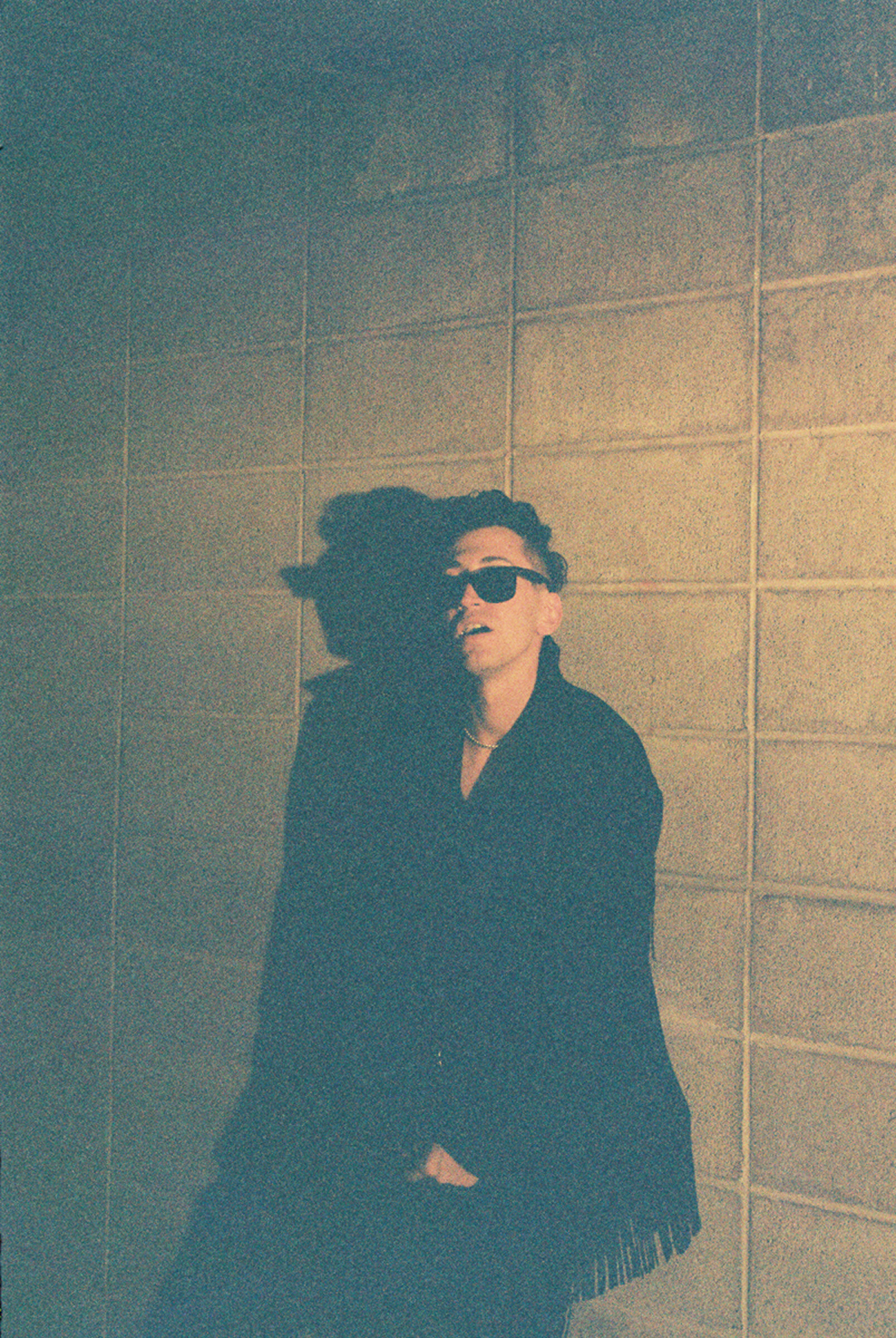
KATIE KUFFEL: INTERVIEW


by emmalyne errickson

photo by kendall rock photography

photo by kendall rock photography

I recently had the amazing opportunity to interview Katie Kuffel, who is an upcoming Seattle-based musician/artist with a captivating voice and lyrics that holds such a deep meaning for her and her fans. Katie's music advocates against violence and sexism, goes through feminism, and so much more. Her upcoming album Alligator explores through everything that she has experienced and hopes to have her fans know that whatever sort of problem (big or small), you should reach out to someone or find an outlet to direct the emotions in you to something you're passionate about. Her song “Carillon is amazing, and showcases all sorts of emotions and hidden messages that is for her fans to find and understand.


What can people expect for your upcoming album Alligator? Anything different than what you’ve made before?

K: “The songs and compositions are more supportive of the lyrics, I feel. Alligator is a more balanced relationship, where the music always cups my voice, supporting it and lifting it. This feels like the first album I’ve made where I’m in full control of the music, too. It’s hard to explain what I mean there, but I want to tell you that I started recording when I was really young, like 17, before I had the confidence and the voice that I have now. With all my other albums up to this point, I relied heavily on the ears and expertise of others, not trusting my own skill or instincts, and I think that... hesitancy showed through the music. I didn’t feel the same proud ownership like I do with Alligator. While yes, I’m working with an awesome producer and amazing musicians, this album is entirely mine. You can listen to it, and feel like you’re looking at a fish tank, and inside are all the parts of me on display. Unapologetic, varied, and undoubtedly my own.”


How did you come up with all your songs in your upcoming album Alligator coming in early 2021?

K: “I wrote a lot of these songs on my own, when I came home from a tour in 2019, and also when my live shows slowed down in 2019. I think giving myself the space, and distance from playing with other folks allowed me to rediscover my point of view. I’ve come to terms with my need for solitude and time in order to write something I’m proud of. I write a lot of these songs rooted in some experience of mine or rooted in kernels of feelings I’ve had and explored. They’re not always literal, but I think the spirit of them is authentic, because I like to write about difficult things that make me uncomfortable. Things like generational trauma, relationships, femininity. It’s a meditation where I can be utterly frank with myself, and where I’m free to write through different lenses.”


Did your single “Carillon” come with some difficulties for you to write/sing for your fans or any new listeners?

K: “I didn’t know what this song was about while I was writing it. Only once it all came together did the pieces click. So much of it was unconscious, subject-wise. Other artists probably know that sometimes when you write you enter this fugue state, and you’re not operating in real life for a period. Then boom, a song comes out. For the uninitiated, Carillon deals heavily with my experiences of sleep paralysis, insomnia, and the foggy way I moved through the world in the aftermath of rape and assault induced trauma. But it didn’t feel hard to sing about. Lyrically it’s a bit of a Trojan horse, since the words are steeped in a lot of groove and driving energy. I think this eased the way for people to connect with it. It’s also vague enough that if you didn’t know me as an artist, you probably wouldn’t have too much of an idea of what it was about anyways, and I think both ways of listening to it are valid.”


How did you come up with the idea of “Carillon” with the fact that it let you speak openly about the violence against women during the 21st century?

K: “Grief and pain never really... go away all the way because extreme events test your mettle and impact your current and future self, even if you wish they didn’t. Not in a way where trauma defines you, but in a way that your perspective just... shifts after experiencing trauma. I’m someone who talks very plainly about this stuff, because I process those tumultuous feelings by making things and creating. Carillon was just the product of me continually reflecting and processing my own trauma, sharing the nuances of my own experiences as a survivor.”


In your single “Carillon,” there’s the repeated verse, “unring the bell.” What can people interpret from these specific lyrics?

K: “This is ripped directly from the saying ‘you can’t unring a bell,’ meaning once something has happened, it can’t be undone. I remember going through periods with thoughts like ‘I can just continue my life as normal,’ ‘I can pretend this didn’t happen’ and, ‘if this didn’t happen, my life would be better’ but that’s not... the reality of the situation. The verse references that desperation I felt, that wishing this didn’t happen to me. But the section immediately after turns into this extreme ownership. Coming to terms and fighting to define myself and work through my trauma on my terms.”


Any advice for your fans who may or may not be facing the exact thing that you’ve experienced or anywhere close to it, and what they should do?

K: “My main advice deals with mental health and recovery in general. I think people live with more shit than they realize sometimes. If it’s available to you, even if you don’t think you need it, try doing talk therapy or another form of safe, unbiased reflection. Because you probably have stuff you need to address and heal from too. Mental health and issues are never your fault, but they are your responsibility to care for, grow from, and understand.”


FIND KATIE ONLINE

WEBSITE TWITTER INSTAGRAM FACEBOOK


WILLOW RAYE: INTERVIEW


by mariah estran

photo courtesy of willow raye

photo courtesy of willow raye

“I’ve always wanted to sing, but I didn’t know if I should,” says the up-and-coming alt-pop songstress Willow Raye. The same artist who in, 2019, released her first single. She had a friend play her a track, she wrote over it, and the creative spark never dulled. Now, as she enters 2021, her eyes are set on a debut album, but executing that goal didn’t come before figuring out who she is, and what she wants to say.

Being an independent artist, Raye has a great deal of creative freedom that her venturesome demeanor fits right into. However, musical soul searching is at the forefront. “I had to figure out a lot very quickly on my own,” she explains. “Figuring out the right people to work with, what your sound is — that’s been a huge thing for me, navigating what I want to have my concrete sound to be.” In the last two years, her tracks have acquired more self-identity after experimenting with different genres. “I feel like I have evolved a lot over the last two years,” she says.  Her initial 2019 tracks like “Déjà Vu” and “Turn Me On” exhibit chill-out EDM influences. “Déjà vu” even got a remix EP due to its good bones. But that genre isn’t where the singer wanted to stay. She has now progressed to an era that she confidently feels is her “sweet spot.” “I’ve officially released music — I’m proud of my branding, what I’m doing with my style and music,” Raye affirms. 

Her new style is grungy emotion intertwined with boldface, pop jabs. She knows what is catchy, and she is using that to her advantage. In October, she released “ADHD.” A two and a half-minute anthem that would make a group of friends sing out a car window. “I wrote something funny that makes no sense,” she shares while laughing about the track.  Adding: “It’s just fun, it’s catchy, and it matched the beat.” But don’t let that lightsome answer fool you. The singer has made room to share a side of her that might not be in strategically placed cheeky visuals and hype inducing beats.

Raye recently released "Manic," her vulnerable dark tune that unpacks a past of mental illness. She became inspired by an unpleasant break-up that had her questioning her sanity. “It went into both sides of having mania moments to being depressed,” Raye describes. “It explains the story of what it is like to go through a break-up when you feel crazy already. It is about questioning yourself and still blaming it on the other person. Like a mental dialogue, I would say.”

Like any individual, musician or not, she’s still human. We do not stay the same, and that’s okay. “I consider my music multidimensional,” she shares. “I can feel like that ‘hot-girl’ one day, but then the next day I can feel like crap about myself, and confused or lonely — lost in it all.” Aware of a climate where we hide our emotions, Raye has no problem reciting her notable highs and painful lows. A quality she hopes listeners will find comforting. “I want them to feel like bad bitches, feel good about themselves, but also know it’s okay to not feel amazing all the time.”

photo courtesy of willow raye

photo courtesy of willow raye

Becoming aligned with who she is has taken time, but she’s finally found it. Raye adores gloomy vintage aesthetics and film photography. She’s got the creatives on her same wavelength to aid in developing content that defines her. “At the beginning, you’re constantly thinking of a branding scheme, but I’ve realized the best branding scheme is being yourself and figuring out what you like,” the singer recounts. The last two years were about becoming more in touch with herself, even during the chaotic year of 2020. She got time to work heavily on her tracks while also learning about herself, and it shows. “I just started doing things that I like more, not because I thought people would like it. I do what I want, how I want it,” Raye affirms as her courage exudes from every syllable spoken.

Her confidence, her passion for elevating her artistry is refreshing after we've lived through months that could be labeled uninspiring. “I want to skip the EP and go straight to the album,” she replies when asked about her next move. A perfect answer considering where her mindset is. “It is the music I would listen to," she says. "It is music I am very proud of writing, it explains my inner psyche."

Raye is collaborating with people she knows comprehends her vision. That includes her voice coach, who is producing the LP. It will take inspiration from alternative-pop acts like BANKS, and genre innovators like Lil Peep, as Willow Raye brings in her rebellious twist.

If we can predict anything, we know it will be a sincere chronicle of what she’s been waiting to share. “I feel like it resonates more with people than me trying to act like some pop princess that has everything perfect in her life. That’s not me. I like to be vulnerable, raw, and real.” 


FIND WILLOW ONLINE

WEBSITE TWITTER INSTAGRAM FACEBOOK


SARA KAYS: INTERVIEW


by danielle holian

photo by meg mccauly

photo by meg mccauly

Nashville-based alt indie-pop singer-songwriter Sara Kays is gaining a lot of popularity with her debut EP Camera Shy, and new single accompanied by music video “Remember That Night?” She holds nothing back in her songwriting, truly making her a stand-out artist. With over 1M+ followers on TikTok and 1.5M+ monthly listeners on Spotify, she's making positive moves with her music, while being open with her fans about her struggles in-turn making her art resonating.

Unclear Magazine caught up with Sara Kay to discuss her musical background, topics in her songwriting, her debut EP Camera Shy, latest single “Remember That Night?” and much more below.

For our readers, please tell us a bit about your background in music.

Sara: “I started playing guitar and singing when my mom gave me a guitar for Christmas in middle school. I quickly realized how much I loved it and started busking in the downtown area of my hometown. This led to playing gigs at local restaurants and bars which became my job throughout high school. After playing a lot of those gigs, I decided to sort of shift my focus to writing songs, and a couple years later here I am. :-)”

Who or what are your musical influences?

S: “A lot of my early influences were a mix of pop punk and singer/songwriter artists like Mayday Parade, Panic! At The Disco, Ed Sheeran, Jake Bugg — and in recent years artists like Alec Benjamin, Kacey Musgraves, Cavetown.”

Why is it important for you to have resonating music dealing with internal struggles with divorced parents, body image, loneliness, and mental health issues?

S: “It’s important for me because it’s true to what I’m going through, and I’ve found that when I’m just completely honest in my music that people who relate find comfort in it. It has been difficult to release a few of my songs, but knowing they might help anyone feel better makes it worth it to me.”

What was your principle around writing your debut EP Camera Shy by being emotionally vulnerable to comfort listeners who relate to your lyrical storytelling?

S: “Like I said before, it has been difficult at times to be emotionally vulnerable in my songs, but knowing that they comfort people makes it worth it!”

Tell us about your latest track “Remember That Night?” and how was the process of making the music video?

S: “I wrote ;Remember That Night?’ after hearing from my ex who had broken up with me a few months prior. Hearing from him sparked a lot of memories and I sort of felt like I had to get over him all over again in that moment. I started writing the song that night and finished/released it within nine days.

Shooting the music video ended up being a lot of fun – it was my first video and there were a lot of nerves going into it, but it was such a laid back shoot. We drove around to different locations in Tennessee for the shots, and my producer Steven was there for most of it because he let us use his car (the same car we used for the cover art).”

And how has your music evolved since you began?

S: “Like with doing anything over and over, I’ve definitely noticed my writing improve over time. The process of writing has become more efficient for me, and I also feel like now I’m more willing to write about things that I maybe would’ve held back on two years ago. Steven, who’s been producing my music from the start, has also just gotten better with each song and he’s a big part of the evolvement.”

How has the pandemic helped your creative juices?

S: “The only way I would say it has really helped my creativity is by forcing me to stay inside more which has just lead to writing songs more often than I think I normally would.”

And finally, what’s one fun fact about yourself for our readers?

S: “I love croutons.”


FIND SARA ONLINE

WEBSITE TWITTER INSTAGRAM FACEBOOK


DES ROCS: INTERVIEW


by meghan brianna

photo by nicole hernandez

photo by nicole hernandez

With the constant changing music scene, it becomes to difficult to find an artist that sticks. Music is coming at us from all angles. New York based musician Des Rocs is making a very distinctive, lasting mark with his music. Rockstar extraordinaire, Des Rocs is an absolute force to be reckoned with. With his newest EP, This Is Our Life, Des Rocs projects reflections on the here and now. Describing it as “a piece of art dedicated to the proposition that our greatest tragedies can lead to our greatest strengths,” Des Rocs is determined to highlight the appeal of rock and roll in the modern age. Having the chance to sit and talk with Des Rocs, we discussed the difficulties that came with crafting This Is Our Life, hopes for the future, and more.

For those who are unaware of who Des Rocs is, can you tell us a little about yourself?

Des Rocs: “I am an artist from New York City.”


What prompted you to begin your musical endeavor back in 2018?

DR: “I’ve played in bands my entire life. Since I could strum a single note I’ve lived in little clubs and out of vans playing shows and creating music. In 2018, it was the first year I decided to truly embrace parts of me that had been a bit more hidden over all those years.”


How would you describe your sound? If you could classify your sound under only one genre, what would you classify it under and why?

DR: “Like an emotional beehive shot out of a fighter jet. I identify as a rock artist, not because of any specific musical element or production choice, but because I think ‘rock’ is simply an energy. That energy consumes every part of my soul.”


A congratulations is in order! You recently released, This Is Our Life. Can you take us through the creative process behind the project? Why choose “This Is Our Life,” as the title of the EP? Is there a central theme that the songs revolve around?

DR: “Thank you. I believe an artist’s duty is to reflect the times in one way or another. ‘This Is Our Life’ is a song for all of us about these wild moments we’re living through. My process isn’t much of a process at all. It’s kind of like everything and anything – all at once. There is no process, rather a constant quest to figure out what my process is. Along the way songs are born.”


What was the most difficult song to write, and what was the song that came the easiest on This Is Our Life?

DR: “‘This is Our Life’ took a long time because I couldn’t stop tinkering with the production. Same for ‘Suicide Romantics.’ ‘POS’ was made in like two seconds and flowed out in a single stream of chaos.”


We are starting fresh with a new year! What do you hope to accomplish in 2021?

DR: “All I want to do is safely perform live again.”


For you, what would you say your greatest accomplishment so far is? It doesn’t have to be the most extravagant, wild accomplishment to others, but whatever you think has had the most lasting impact on you.

DR: “Becoming Des Rocs. Embracing the art I want to make without regards for what anyone else is doing creatively.”


What is your creative process behind your work? What usually comes first? A melody? Some chords? Lyrics?

DR: “It’s really all of the above, there’s little rhyme or reason to how a Des Rocs song is made, and I think you can hear that in the music itself. Last night on my way out of the studio my lamp made a weird squeak noise when I turned the light off. I recorded the noise and stayed up all night making a beat to it.”


When you started your musical journey, did you ever think you would share the stage with artists such as Bring Me The Horizon, and The Rolling Stones? As well as have your music featured on television?

DR: “I have always had a vision in my mind that outpaces the places I was playing. I’ve had that my whole life. These are the artists I always want to be in the ring with.”


Where do you hope to see yourself within five years?

DR: “Playing the first show on the moon.”


Finally, do you have any words for your supporters? What would you like to say to people who have yet to discover you and your music?

DR: “Jump on in the water, it’s warm.”


FIND DES ROCS ONLINE

WEBSITE TWITTER INSTAGRAM FACEBOOK


'RISE LIKE THE SUN' / DAR.RA: REVIEW


by abby crabill

photo courtesy of dar.ra

photo courtesy of dar.ra

Dar.Ra is a multitalented singer-songwriter, producer, and author. He also set up the Kusha Deep Label. He has a large variety of EPs, including: "Now Is Now," "Live For Love," "Stand Up for the Heroes" (a tribute to essential workers during this current global pandemic) and his latest album, "New Kinda Normal." His music can also be found in various Hollywood films, including: Snakes on Planes, films on ABC TV, Match Of Day (BBC TV), and US documentary, City Of Hope. Aside from music, Dar.Ra has also written two books under his full name, Darragh J Brady. These books combine music with literature. The first titled, "Road Tales," is about people with life changing stories that he met while touring the globe. The second, "The Night That Jimi Died," follows a girl who channels the spirit of Jimi Hendrix and rises to change the DNA of the world through music.

Dar.Ra's single “Rise Like The Sun” is an overall shift from what his listeners may be accustomed to. The major tone of the song gives off a Latin vibe created by the various instruments, which creates an upbeat song to dance along with. On the other hand, the heavy lyrics appear to be almost a contradiction to the lightweight sound of the song. Full of thought-provoking lyrics, the song seems to center around the lines, “You think you’ve got all the time in the world / And then you get born.” There are several ways that these lines could be interpreted, though it is best to consider the full circle approach that the song takes in order to fully comprehend the message. In the beginning, Dar.Ra sings, “I want to rise like the sun and hold back for no one” sounding confident and bold. The song finishes with the line, “I’ll pray and rise like the sun/and be somebody in your eyes" creating the idea that he might not truly be so confident and is trying to live up to others' standards. Once this is recognized, the initial feeling of contradiction between the lyrics and sound of the song only seem to enhance the idea of the struggle between faux external lightweight happiness/confidence and heavier internal battles. Not only is this song an excellent insight into Dar.Ra's thought process, but its internal struggle and message is one that is able to resonate with many of us.