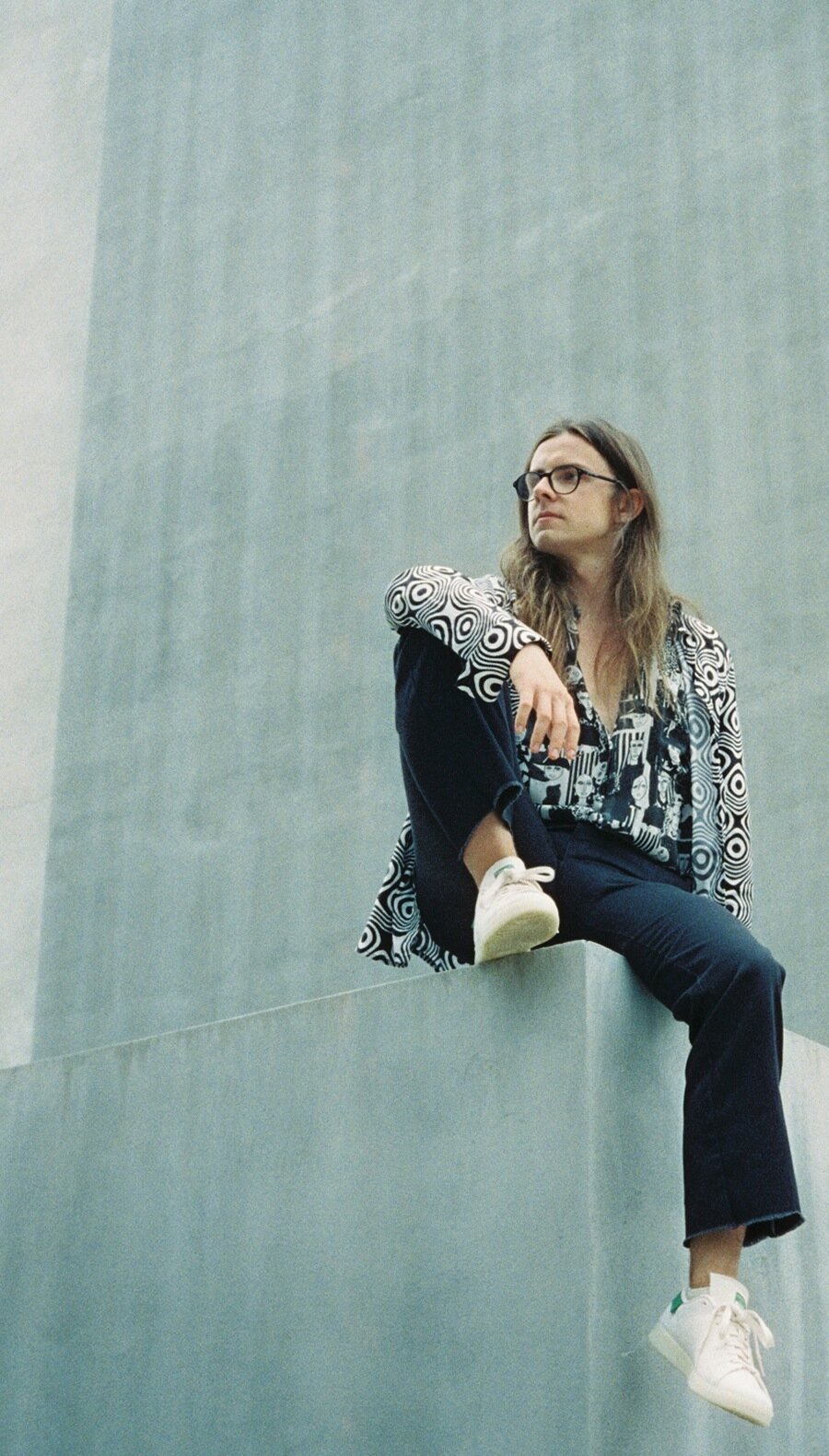
GEENA KAYE: INTERVIEW


by mariah estran

photo by sara laufer

photo by sara laufer

Those big moments: moving to a new city, starting a new job, experiencing your first heartbreak. These chapters, at times, seem daunting, but ones you might not ever forget. For singer-songwriter Geena Kaye, writing songs about her own life has always been the focus. Even when breaking her arm at 9-years-old; she wrote about her pain when instructed not to play guitar for six months. 

So, after moving to New York and navigating a new life, her latest EP, I Dreamed I Was You, Dreaming of Me, became the documentation of that journey. Through the seven-track record, we are taken through the highs and lows. Moments of vulnerable breakup emotions, to dance-yourself-better synth-pop glory. Song’s worthy of being a comfort through familiar uncertainty. 

The singer-songwriter took the time to tell us more about the record, sharing more on the writing process, favorite track, finding the right sound, and how this EP helped her sort through her own life changes. 


You’ve just released your new EP, I Dreamed I Was You, Dreaming of Me. The record holds such a beautiful mix of tracks documenting the life of a young woman living in the city. From breakups to the confusion tomorrow might bring, it’s an account many might find relatable. For you, what was the writing process like when creating this EP?

Geena: “Thank you so much! The writing process for this record was actually pretty interesting because I didn’t start writing and immediately think that the songs were going to come together in an EP. I set out to try and tell the best stories I possibly could.

My songs have always told stories from my life, or observations of people, but something a songwriting professor told me in college really struck a chord in me, this time around. It was along the lines of, ‘How can you show your audience that you are the only person who can tell this story?’ Basically, write a song so specific, that only you could have written it. So that’s what I tried to do! I tried to make every image as intimate and personal as possible, though still capturing the similarity of the mid-twenties growing pains.”

There’s a noticeable fusion of sound that flows through the record. From dance-floor type beats to kicky, synth-wave numbers. How did you figure out what sound you wanted this EP to hold?

G: “For years and years, I believed that sad songs needed to sound sad. When I started working with my current producer, Ronnie, we would sit and talk through sonic references and discovered we both liked a lot of pop music. We both have an undying love for Robyn, and he got me into Charli XCX and Carly Rae Jepsen.

My father is German, and I lived in Germany for the first 18 years of my life, so I grew up with a lot of euro-dance playing on the radio. Haddaway, Boney M, Culture Beat, Eiffel 65… We had such a fun time listening to old dance music and love a lot of new pop artists as well, and it seemed inevitable that we had to mash those things together.”

Each of these songs seems to be sentimental documentation of moments from your life. Very honest, while still being a comfort to whoever takes a listen. Is there one track you feel stands out for you or has become your favorite?

G: “It might sound cliché, but I really do love all of them. The title track, ‘I.D.I.W.Y,’ definitely holds a special place in my heart. It was the last one I wrote, in November of last year, and seemed very much like the uniting song to tie all the others together.”

What do you hope listeners take away after listening to this collection of songs?

G: “It’s funny because I was discussing this with a new friend a few weeks ago, who had never listened to my music before. I told him, ‘If just one person feels understood, or feels like even one song helps them process something they’re going through, then I will have succeeded.’ I hope that listeners feel like it is okay to have messy moments in life, it is okay to feel deeply, and it is okay to laugh and dance and cry all at the same time. Emotions are so multifaceted and complicated, and I would hope that this shows listeners that all of that is real and beautiful and okay.”

When creating this EP, how do you think it helped you process transitioning through these big moments in your life?

G: “Writing songs is something I HAVE to do. I could never stop myself. Songwriting is my favorite kind of therapy, emotional release; it is the way I take apart moments in life, evaluate and organize them, and the song is the puzzle of putting it all back together and making sense of things. Writing the EP helped me to sort the two years of emotions into ‘chapters’ of sorts, it helped me to distinguish what was really important.”

Lastly, what do you think I Dreamed I Was You, Dreaming of Me says about you as an artist so far?

G: “A tough question! Hmm. I guess it says that no matter what my music sounds like, I’ll always be brutally honest and reflect deeply on moments in life. But I think it also says that I firmly believe that a song about intense emotions can also make you dance!”

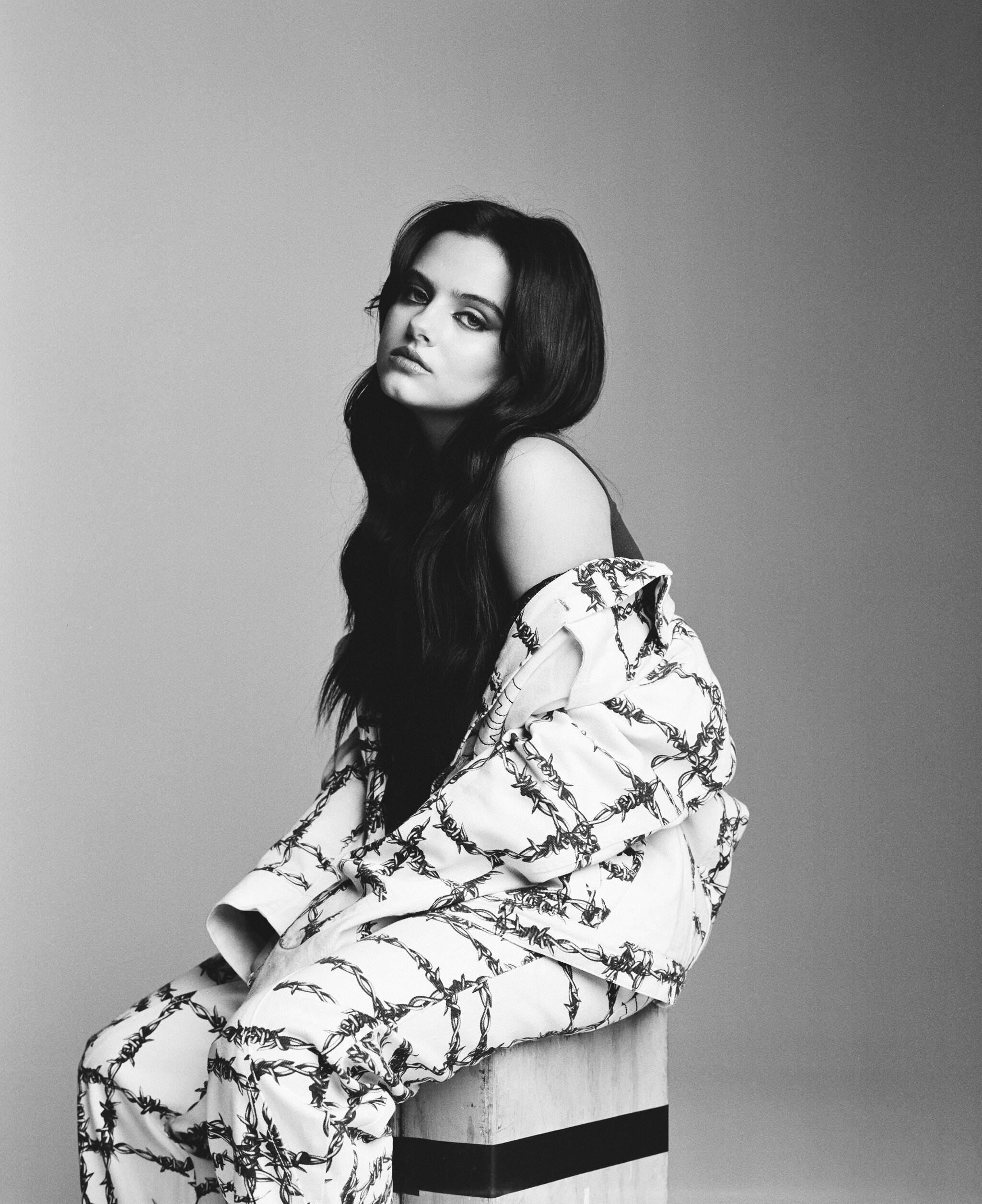
 

FIND GEENA KAYE ONLINE

WEBSITE TWITTER INSTAGRAM FACEBOOK


SAINT BODHI: INTERVIEW


by emily harris

photo courtesy of saint bodhi

photo courtesy of saint bodhi

Saint Bodhi is a GRAMMY Award nominated singer, songwriter and rapper. Hot off the release of her newest EP Antisocial, Bodhi is creating a name for herself within the industry. The six-track EP is a testament to the power of beautiful lyricism and melodious, yet soulful, voice. We had the chance to chat with her deeper about the EP!

Congrats on the release of your EP Antisocial! How does it feel to finally have it out into the world?

Saint Bodhi: “Thank you . It feels amazing me and Neffu worked really hard to bring this project to life.”

What was the inspiration behind the album artwork as well as the album title?

SB:Antisocial is about me looking inward and basically being antisocial. I wanted to be isolated in the water. Like it’s basically just me floating in my emotions.”

The first track, “Antisocial,” starts off the six track EP strongly! Why did you choose to place this as the first song?

SB: “It’s a title track if the album. Thought it should start it off.”

The fifth track, “Hurt Me” has an accompanying music video! Can you talk about the filming process behind it?

SB: “It was so fun filming. I’m pretty sure the car almost blew up. But it was a long productive day.”

What inspired you to end the EP with a lyrically-hitting track like “Heaven Is Real?”

SB: “That song really hits home for me. Most of the album is a bit more open. I thought it best to be personal at the end of the album.”

What was the writing process like for track four, “Guide Me To the Light?”

SB: “It was fun writing Guide Me To the Light. Me and Neffu danced a lot [and] vibed out to the record.”

What song from the EP would you recommend to someone who has never listened to you before? Why?

SB: “I’d recommend ‘Hurt Like Me.’ It’s a real record and most people can relate.”


FIND SAINT BODHI ONLINE

WEBSITE TWITTER INSTAGRAM FACEBOOK


JESSIE MURPH: INTERVIEW


by mariah estran

photo by daniel prakopcyk

photo by daniel prakopcyk

The 16-year-old alternative-pop artist Jessie Murph is a fearless force. An authentic performer completed with a fierce lyrical structure. But it wasn’t always that way. Growing up in a small town, she posted content on TikTok. Then was faced with misogyny-fueled harassment once her school took notice.

Yet, that backlash pushed her to make music. Now, releasing her latest single and visual, “When I’m Not Around.” A haunting tune that recounts those dark high school moments, clone-like cheerleaders fill the cafeteria while other students are seen whispering behind Murph’s back. It’s a dark, truthful report that is commonly swept under the rug.

However, the singer isn’t scared to discuss her experience. She even posted a video describing what specifically influenced the track which included being forced to run miles for every curse word she spoke on her social page.

Jessie Murph took the time to talk more about “When I’m Not Around.” Giving more insight on the video, her songwriting, her sound, and what advice she would give to someone going through similar events.

You recently released your powerful single and video for “When I’m Not Around.” I took a chance to watch the video you posted about the story behind the track. It’s such an eye-opener. Especially for those who might not understand some of the dated standards still heavily present in the south, and just in general when it comes to criticism women endure. Why was it important to you to share this story?

Jessie: “I really feel like going through that made me the person I am right now. It is such a real thing. Especially where I’m from, and I’m sure, a bunch of other small towns. It just sucked, and I wanted to write about it.”


The corresponding visual really cements the impact of the track. There seems to be a lot of symbolism, such as the cheerleaders with blonde hair. What more can you tell us about the video and the process of developing what you wanted to portray?

J: “It’s telling my story on a video. If you look closely, you can see the whispers in the background. That was so prevalent in my life. The cheerleaders being in sync, being the same, looking the same. It was just so real. You never see that in a video, which is crazy to me.”


You have such a way of mixing a dark edge with captivating pop elements. It’s so hauntingly beautiful, to say the least. Who are some of your inspirations while developing your sound? 

J: “Honestly, I listen to a f*ck ton of music. I love rap music; I like the aggressiveness of it. I’m super inspired by aggressive lyrics. So, that kind of comes from that side of things. I also listen to a lot of country. A lot of country songs have powerful lyrics and a powerful message. So, I kind of like mixing those. That’s how ‘When I’m Not Around’ came around.”


Your lyrics are fearless, bold, and attest to your “I’m not giving up” attitude. You draw a lot from your past, but what is the songwriting process like for you? How would you say it’s helped you process your own emotions?

J: “Music is so therapeutic for me. I know a ton of artists say that, but I hate talking about emotions. I’m not a super emotional person when it comes to talking about it. But in music, I can let it out and be a hundred times more dramatic. It’s helped so much. I’m so in-tuned with the writing process, and it’s my favorite part. It means so much to me, and I am so particular about the aggressive lyrics and stuff like that.”


I’ve read that through everything, the ups, and downs. It really lit a fire in you to keep working on music and your dreams. What is it about the power of music that has helped you keep pushing? 

J: “I feel like I have a chip on my shoulder, a hundred percent. When people say ‘you can’t’ over again, it makes you want to be like, well, watch me. So, the little steps. When I released my first single, I was like, okay, I did that. And now, I need to do this. The whole journey is really inspiring and incredible.”


A lot has changed from the girl brought up in “When I’m Not Around.” You definitely have this confidence that shines in your music. How do you feel you have grown so far, even within the last few months of releasing your own music?  

J: “I feel like I’ve grown so much, just finding myself. Before that, I was just lost and not myself. Trying to be someone I wasn’t. So, the second I stepped foot into that world (music), it was like a weight lifted off me. I feel like I can really be me now. That’s so exciting and so much to explore; I’m looking forward to all that.”


You’re so open about your story and who you are. How do you hope your music will impact listeners as they join on your journey? 

J: “Honestly, when I listen to music, it’s so therapeutic to me. Sometimes I like getting mad at random sh*t, so I can listen to mad songs and vibe to them. I hope people can listen to my music and scream it in the car or cry to it in the car. I just want it to help people.”


What advice would you give to your listeners or up-and-coming artists who are dealing with this criticism you dealt with in the past?

J: “Just start doing your own thing sooner and not listening to what other people say. Especially in high school because you’re not going to know those people in ten years, you know. Why let those opinions affect you? Chuck it in the f*ck it bucket — that’s my advice.”


You’ve already released two other singles, such as “Upgrade” and “Look Who’s Cryin Now.” What can fans expect from you next? Will there be a larger project in store? 

J: “I’m just really excited about getting music out, in general. A lot of what’s out is more pop — it has a pop aspect to it. The stuff that’s coming is a little more hip-hop. I’m excited to share that side of me because it’s such a prominent side. I’m really excited about that. There are music videos too!”


FIND JESSIE MURPH ONLINE

WEBSITE TWITTER INSTAGRAM FACEBOOK


DEREK SIMPSON: INTERVIEW


by mariah estran

photo by sergio de la torre

photo by sergio de la torre

When Derek Simpson was twenty years old, he took his first solo plane trip. Making the voyage from Boston to California, he wondered if he would know how to navigate the airport terminals. Stressed and overthinking, his sister Alex provided a reassuring point. She said, “Derek, think about how many people go into the airport on a day-to-day basis. They have to make the signage clear and concise to everybody who’s coming through there.”

During that pivotal explanation, Simpson found beauty in the simplicity signage holds. Designs capable of being understood by the masses. Could that universal awareness translate through another art form, through music?

Signs, the newly released sophomore album in Simpson’s discography, might be that. Through eased, playful production, he’s found a way to discuss topics that are otherwise confounding. Inspections on relationships, connections being found and lost in an instant. Those typical scenarios are factually portrayed through each track, erasing continued emotional disorder.

“The music was taking a turn towards being more minimal, intimate, and about relationships,” the artist explains. “But not really from a place of judgment or trying to paint characters in relationships.”

It was 2020 when Signs began taking shape. On the heels of a breakup and state-mandated stay-at-home orders, the odd standstill in time gave way to tracks being thoroughly contextualized. “It starts with this song that’s talking about recognizing there’s a connection between you and another person, but you don’t know exactly, what it is,” he says. The first track, “Hide + Seek,” holds that sentiment by describing a desire complete with juvenile tendencies. By song five, the listener is met face first with the perplexity relationships contain — specifically, within the digital age. “Talking To Strangers” shines a haunting light on a familiar dating predicament —‘ghosting.’ Through funky, R&B bass lines, Simpson reminds the listeners that we are simply talking to those truly, unknown. And there’s no answer to why the disappearing act is the move of choice. “It kind of ends on this note of I still don’t know what’s going to happen,” he shares when talking about the rollercoaster of emotions putting yourself out there can reveal. “But I know that what I really enjoy is getting to know somebody, getting to know this person.”

Simpson makes it clear that the album has no resolve. No grand conclusion, which solves our relationship woes. Yet, in short, that makes it sensible. Do we ever have a clear-cut solution to how we feel or understand? “Traditionally, I feel like there’s not a lot of albums about relationships or about intimacy in this way,” he states when describing the LP. Adding there’s typically a painted perception of connections compared to what he has produced. “I feel like this doesn’t get airtime, ever. The real things about relationships, figuring it out.”

There’s a tinge of profoundness in Simpson’s tone. He confides that he’s unsure of his thoughts on these layered-filled topics because it takes time to dissect them.” I just knew that I was feeling,” he says when looking back on his songwriting. “I still think about things and still get equally confused. So much of that is unclear because it involves other people. Your feelings are changing all the time, and to try to become okay with that is a weird thing.”

photo by sergio de la torre

photo by sergio de la torre

However, those sizable feelings are balanced out track by track. The record's groovy essence takes the listener on a kaleidoscopic ride. Chill-approved energy that Simpson calls 'International Vibe Maintenance.' "The best thing I can do is supply something very calm, still very groovy,” he explains. “I think music that keeps me feeling centered, calm, and peaceful is doing this incredible work that is hard to do.” The work started with falling in love with playing again. From preparing for a future of live performance to simply picking up an instrument, it was a process. While the songs he says are simple to play, simple to perform. It’s the production that brings each track to a hypnotizing level. He finally let go. “I’ve learned to allow myself to be playful with live instruments or things that sound live,” Simpson explains.

Finding a sudden infatuation with the Beastie Boys and their use of boundary-pushing sounds. Those brazen mixtures of tones would become handy. “I’m finishing up ‘U-turn,’ and I’m like, but it needs something else,” he recalls. “Then I listen to something that sounds totally different from it, and you hear the approach they had. They put this weird, wiggly synth over these super hard guitar chords. It was almost like it was reminding me to be playful.”

For the musician, his previously released album, King Sun, was that rule-following product. One that he confesses wasn’t perfectly executed. He knows that overthinking could be a hindrance, and so can going in with a particular genre in mind. But now, that’s changed, and the proof is Signs. “I think, coming to these newer releases, and Signs as a whole, as a record, it feels like I’m getting more comfortable with music being what it is,” Simpson describes.

While the LP derived from the tumultuous shifts in relationships, there’s still room to look past those deep subjects and be immersed in the actual music. Simpson finding comfortableness in production allowed for transcendent moments. Moments of pure delight, such as the six-and-a-half-minute closing track, “Kid The Moon.”  With elation towards his own work, he says, “Whenever I put it on, it just rides out. A six-and-a-half-minute track can feel indulgent, but with this one, I want to live in that groove. I just want to live in there.”

Simpson found his own comfort in his music. Accepting the perplexity of human emotions cuts the bullshit. Making music is a process, and discovering a new connection is just as onerous. Acknowledging this seems to have given us songs we can read into; or simply enjoy the mesmerizing journey the sounds take us on. “I hope that while it’s on, it can feel like a great surrender experience,” he says, thinking on the impact of the record. “Even if you enjoy it at that moment and never hear it again. I feel like some quality has been added to that person and their experience on earth.”


FIND DEREK ONLINE

WEBSITE TWITTER INSTAGRAM FACEBOOK


KESHA / LIVE ON TOUR: REVIEW


by alyssa hudson

IMG_2973.jpeg

After a long wait, Kesha is finally back with a bang. Whether you grew up being an “animal” or you are new to the party, there’s room for everyone on this wild ride.

The show started off with not only the throwback, “Cannibal,” but contagious energy, fantastic dancing, and a vocal range that will you breathless. Everyone on stage was in perfect harmony in Atlanta as they had the time of their lives. 

IMG_2989.jpeg

The set list is a perfect mix of new and old, so everyone is welcome. From the classic party anthem “Tik Tok” to the power ballad “Praying,” there’s something for everyone. While dancing, Kesha doesn’t miss a beat with her incredible vocal range. This woman is true power house. 

IMG_3022.jpeg

Kesha definitely left her mark as there was plenty of glitter to go around. If you didn’t show up with it, you definitely left covered. The multi-talented singer not only showed off her singing ability, but also awed the crowd with a few more tricks. From the guitar to a glitter covered drum session, it was a sight you didn’t want to miss. Nonstop energy from not only the stage, but the crowd. 

The Coca-Cola Roxy was transformed into a safe space to be who are you without judgement. Kesha has created a bright, welcoming place to be if you feel different. Because no matter where you come from, there’s a firm reminder early in the show that “we are who we are.” The overall impression of the show left me feeling free and ready to take on tomorrow.