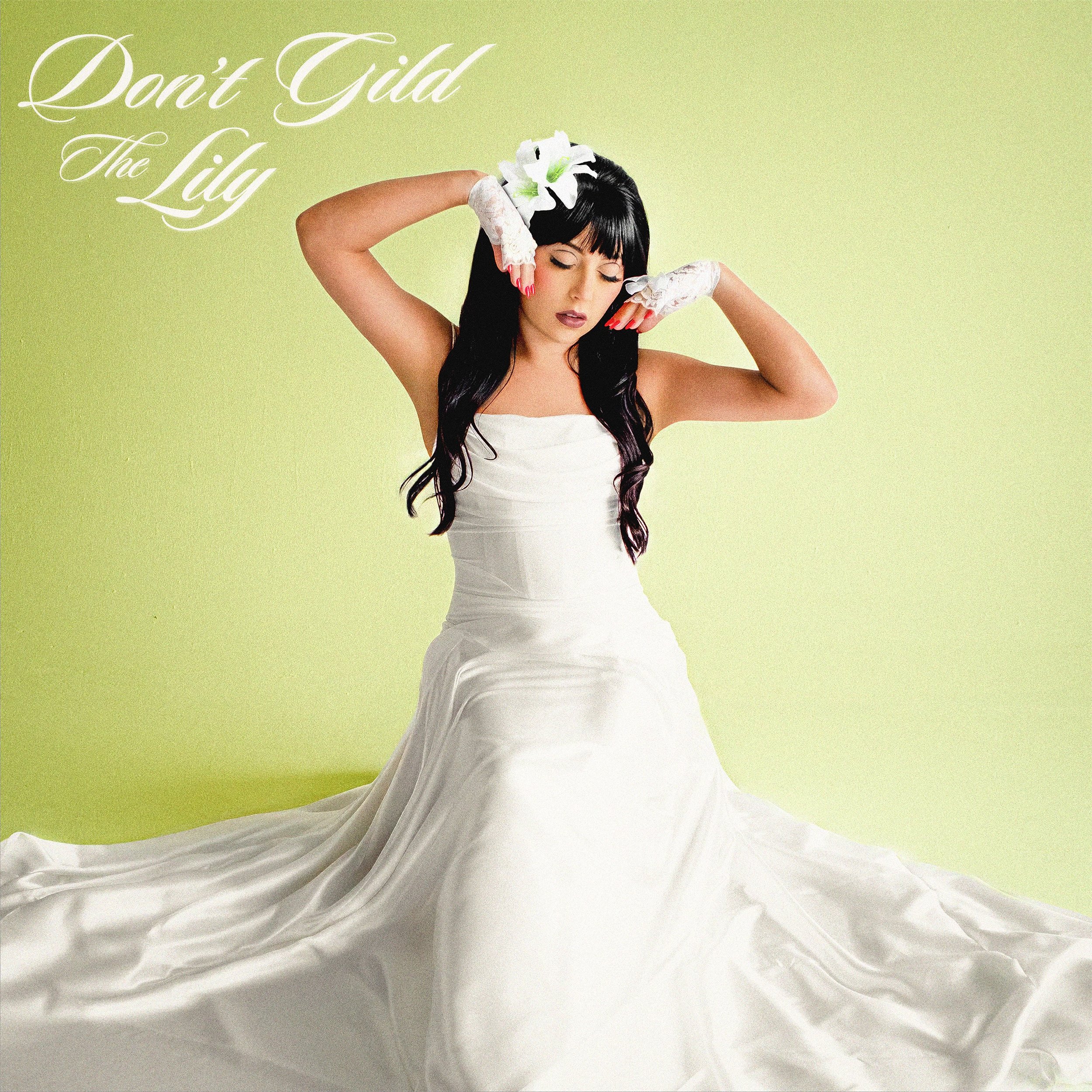
LILY FORTE FINDS BEAUTY IN THE STRUGGLE ON DEBUT ALBUM "DON'T GILD THE LILY"


by benwego

Indie powerhouse Lily Forte arrives with her debut album, Don’t Gild the Lily, a clever play on words that intertwines her name with the idea of leaving beauty unaltered and honest. The title immediately establishes the album’s ethos, signaling a body of work rooted in authenticity, patience, and a deep reverence for what already exists beneath the surface rather than forcing excess or perfection.

Across the album, Forte leans into lush floral and picturesque imagery, pairing it with invigorating vocals to build a vintage sonic landscape that pays homage to her musical heroes. She paints with the brush of Old Hollywood glamour, sun faded nostalgia, and diaristic lyricism, creating a world that feels both cinematic and intimately confessional. With just 11 songs, Don’t Gild the Lily offers an impressive amount to unpack, from its striking instrumentals to its California soaked imagery. Each track unfolds like a postcard from another time while remaining firmly grounded in the emotional realities of the present. 

The title track opens with the line “there’s living in dying, there’s pleasure in pain,” immediately introducing one of the album’s central themes. The lyric captures the emotional duality that runs throughout the record, the idea that growth and artistry are inseparable from struggle and sacrifice. By acknowledging that joy and suffering coexist, Forte sets the tone for an album that refuses to romanticize the road to success without first confronting its cost. As the song unfolds, its airy falsetto chorus gives way to a jazzy, Amy Winehouse inspired groove where Forte asserts her self worth with the line “and that’s living like a legend,” reframing perseverance itself as an act of triumph. The moment feels both defiant and self affirming, positioning the record as a declaration of identity and a promise to endure whatever it takes to keep creating.

The album exists in a time machine space, unfolding as a nostalgic yet restless journey shaped by early Lana Del Rey and Lady Gaga inspired wordplay, 60s glamour, and the quiet anxiety of waiting for your moment to arrive. Forte consistently grapples with questions of time, ambition, and survival, particularly on “Stardust.” Here, she reflects on the slow burn of chasing a dream, candidly admitting that “working for the man was never really in my plan,” a line that captures both her defiance and her uncertainty about how long success is supposed to take.

At its core, “Stardust” feels deeply personal, capturing the suspended emotional state of waiting for a breakthrough while clinging tightly to self belief. Lyrics like “fucking up the routine, Florida to LA, is it home or holiday?” expose her internal tug of war between the place that raised her and the place she hopes will transform her. Florida represents familiarity, while Los Angeles embodies ambition, and Forte never pretends the choice between them is simple. Instead, she questions what home really means when the pursuit of becoming someone new pulls you further away from who you once were.

That sense of longing intensifies on “Florida’s Finest,” an existential love letter to youth, roots, and a world before streams and algorithms. When Forte sings “I miss iTunes,” the line lands as more than a throwaway reference. It becomes a symbol of an era when music discovery felt more personal and less transactional. Florida becomes both a physical landscape and a state of mind, sun soaked, bittersweet, and formative. The chorus, “oh the world keeps on turning, that’s the way life goes, it’s a lesson I’m learning, no one ever really knows,” stands out as one of the album’s most emotionally gripping moments, encapsulating the uncertainty that runs throughout the record. Forte continues paying homage to the artists who shaped her worldview, singing “learning from the visionaries, pay them for what they know,” a direct nod to Old Hollywood and the creatives she reveres, positioning herself as both a student and a torchbearer.

As the album drifts west, California sunshine and Ventura Highway imagery take center stage. “Golden Sunshine” is a warm, sun drenched ode to an almost ethereal love, capturing a cloud nine feeling through its euphoric simplicity and emotional realism. Lines like “you said I was your golden sunshine, be my forever and you’ll be mine” channel early Lana Del Rey in both tone and tenderness, balancing romance with emotional fragility.

“Loners on the West” moves fluidly through multiple emotional and sonic landscapes, grounding itself in cinematic melancholy and isolation. A nod to Lana at the opening sets the mood as Forte reflects on the disorienting nature of Hollywood, asking, “this city is strange, with its lowlifes and fame, why does everyone here love to play the game?” The question lingers, revealing both her fascination with and skepticism toward the industry she is trying to make a name in.

Misogyny emerges as another recurring theme on “Loners on the West,” particularly in the biting frustration of the lines, “I’m so sick of fucking wanting what I can’t have, so sick of always wasting time, I see the guys and their perfect lives.” Forte confronts the imbalance she observes around her, where opportunity often seems effortlessly handed to others. This theme continues on the first single from the album “Miles to Go,” a track dedicated to toxic male figures and the exhaustion of shrinking oneself to fit into their worlds. Forte bluntly declares that staying quiet never served her, confessing, “I got a million things I’d rather be doing than hanging with you and your boys on the road.” Her delivery sharpens further with unapologetic jabs like, “you’re so trashy when you’re doing blow, met your match in the pills in those Hollywood hills,” blending both anger and wit.

“Jimi and Janis,” retreats into an imagined inner universe where 70s rock still reigns. It is a place of freedom, rebellion, and eternal music, untouched by modern pressures. When Forte sings, “Jimi and Janis are alive inside my planet, jammin out to Woodstock in my mind,” she creates a vivid psychedelic escape.

The album’s second single, “Out of the Blue,” delivers one of its most emotionally jarring moments, confronting betrayal and hard truths with biting honesty. “Hope you’re sipping something strong when you find out the problem’s you,” Forte sings, addressing a breakup that arrived without warning. The song balances hurt with disbelief, its tongue in cheek delivery cutting deeper as she asks, “baby what the fuck was that? Did you find Jesus on the road? Was it in something that you smoked? And honey who the fuck are you?”

The track flows seamlessly into “The Luckiest,” a dreamy, melancholic reflection that feels like the emotional aftermath. Forte asks her former lover, “did you forget I’m the luckiest damn girl in the world?” while subtly pushing him toward the life he chose over her. Lines like “casting their spell, they got you baby, can’t look at yourself” carry a haunting sense of resignation. Together, these tracks feel sisterly in their message yet contrasting in delivery. This emotional trilogy closes with “Baby Burnt Us Down,” a final moment of romantic isolation and reluctant acceptance as Forte reflects, “baby thinks there’s bigger plans than being the drummer in my rocking band,” acknowledging the quiet heartbreak of being left behind.

The album closes where it began, circling back to themes of living and dying on “Beauty in Everything.” Forte admits, “it’s hard to see the beauty in everything, but I’m really trying, I’m living and dying,” finding solace in the small and sacred, singing, “I found my heaven in my record collection.” The song functions as a profound ballad about resilience and burnout, capturing the emotional toll of chasing a dream when it feels like no one is listening. Lines like “no one really cares why I sing the blues” and “mascara’s coming down, baby I lost my crown, burnout like a showgirl” lay bare the singer-songwriter’s vulnerability. The record ends on a note that feels both intimate and universal, like flipping through memories on vinyl and realizing they are still spinning the story of who you are becoming.

Don’t Gild the Lily is a promising debut that captures the struggles of an artist navigating Hollywood through a nostalgic lens while wrestling with the weight of uncertainty about what lies ahead. It is a record that honors the past without being trapped by it. Through nostalgia and vulnerability, the record captures the emotional push and pull of chasing a dream while still learning how to survive within it.


 

ARI LEE: INTERVIEW


by martina rexrode

photo by saskia kovandzich

Vulnerability is one of the bravest emotions an artist can show. Whether it be through music, dance, visual art, or other mediums, onlookers are often able to sink their teeth more into art that reveals something about the artist and, ultimately, themselves. On ARI LEE’s latest single “Someone For You,” the artist bares her soul to listeners after two previous singles that leaned more into the juxtaposition of brighter sounds expressing pain. This time around, there’s no sugar coating. ARI LEE spoke to Unclear about this single, how it ties into her Trophy Wife In Training EP, and her biggest goals for the year.

Congratulations on your new single, “Someone For You!” How does it feel to have this song out in the world?

ARI LEE: “Thank you! Honestly, it feels quite scary because this is definitely a more vulnerable part of my artist project.”

What does this song mean to you? Are there any specific images it evokes when you think of it?

ARI LEE: “This song is quite complex because it’s about family. The images that really stuck out to me when writing this song were family portraits — you see them throughout history of different families and in people’s houses. When I see family portraits, I always wonder what each person in the photo’s story is, what was happening in that very moment, what the dynamics are, who’s the black sheep, etc.”

How do you think listeners might interpret the lyrics of “Someone For You” to fit their own experiences?

ARI LEE: “While I wrote this from a place of wanting my family’s validation, the lyrics don’t make it too obvious at the outset that that’s what it’s about. Most people I’ve played it for think that I'm talking about a romantic relationship. But that’s the beauty of art and how it can mean different things depending on one’s own experience.”

Do you have a favorite set of lyrics from this song? Why do they speak to you?

ARI LEE: ‘If I climbed all of your mountains would you change your mind’ in the first verse. To me it’s a simple lyric that I’ve always thought about. What would it take to prove yourself to someone? What’s the bar and why am I so desperate to reach it?”

What made you decide to release “Cruel Lover,” “The Kissing Girl,” and “Someone For You” in this order?

ARI LEE: “The throughline of all of these singles is that they’re my realization that a lot of the negative feelings and situations I’ve felt — whether it be being lost in a person, an idea, or external expectations — are all kind of my own doing. I don’t want to play the blame game. The only way forward is for me to make changes. I feel like these songs communicate this introspective phase that my artist project character is in after escaping Stepford in my EP Trophy Wife In Training.”

What kind of identity do you hope to project as an artist this year? Is there anything you want to do differently or similarly than previous years?

ARI LEE: “This year, I want to play in the grey area more. Luckily, I’m in a place in my career where I have complete creative freedom, and I want to push myself sonically, lyrically, thematically, and physically. Life is not so black and white and I want to explore the nuances of the subjects I wrote about in 2025.”

If you could name three of your biggest creative goals, what would they be?

ARI LEE: “It’s my absolute dream to do a performance video where I incorporate choreography since I grew up dancing. And when the time is right, a second goal of mine is to make an album — I love storytelling and I feel like an album would enable me to tell a fully fleshed out narrative through music, start to finish. I’d also love to go on tour so that I can meet more people from my community and expand it.”


FIND ARI ONLINE

TWITTER INSTAGRAM FACEBOOK


ONE OR EIGHT: INTERVIEW


by martina rexrode

photo courtesy of one or eight

Releasing new music at the start of a new year is no easy feat. For ONE OR EIGHT, a Japanese boy group who first debuted in 2024, they knew they had to kick 2026 off with a bang. With a mini-album, GATHER, recently released and their first global tour beginning in March, the group’s near future is bright, making the more distant future that more exciting. Unclear sat down with ONE OR EIGHT to discuss their single “POWER,” the mini-album, and what’s to come as 2026 unfolds.

You kicked off 2026 by releasing your electrifying single “POWER” on January 7th. Why do you feel this was the right single to drop first this year?

TSUBASA: “This song ‘POWER,’ it was chosen as the ending song for the anime Yoroi Shinden Samurai Troopers, and so we wanted to match the timing with the anime release, so that’s reason number one. The other reason is that, as the name suggests, we literally wanted to kick off the new year with a very powerful song and a very powerful sound, so that’s the reason we started with ‘POWER.’”

How does “POWER” elevate your musical identity after the success of previous singles like “KAWASAKI” and “DSTM?”

MIZUKI: “When we look back from our debut or even before that, we have built a lot of experiences and regrets, all of which have helped us grow and develop as artists and as human beings as well. Through that, we think we have been able to acquire a lot of power and a lot of strength, so I think that this song being released will help us identify that side of ourselves.”

“POWER” is just one of eight tracks on your mini-album, GATHER. How are you feeling now that you’re less than two weeks out from the release of this project and how have you been preparing?

NEO: “We’re feeling anxious and very excited at the same time. We’re going to have this mini-album release, but also we’re going on tour this year, so we have these two big events coming up. We definitely want to make sure a lot of people come and visit us on tour. At the same time, we want to make sure our album, GATHER, appeals to a big audience, so yeah, we’re excited and anxious.”

“TOKYO DRIFT” starts the mini-album off on an explosive note. What was the energy like in the studio when you were recording this track?

RYOTA: “For ‘TOKYO DRIFT,’ we were super motivated. For 2026, obviously we want to appeal to the global audience as we have been doing so far, but also really want to focus on our market that is within Japan. We’re super pumped and full of momentum. As you know, ‘TOKYO DRIFT’ is the sampling of the iconic song ‘Tokyo Drift’ by Teriyaki Boyz that everyone is familiar with from the Fast & Furious movie. This track is our version in which we wanted to unleash our color and our uniqueness so that all the fans and listeners can feel our motivation and commitment. There was a lot of energy in the studio, the production process, and in creating the music video as well.”

What went through your mind the first time you heard the demo for “TOKYO DRIFT?”

REIA: “Initially, ‘TOKYO DRIFT’ was scheduled for the four rap members and was originally all about rap. I personally really like the Wild Speed movies, so I was a bit envious and was hoping that the vocal members would be involved as well. When we learned that we were actually going to be included and that all eight of us would be able to perform this song, I was just so happy and am really honored to be able to sample this song.”

What’s it like to look at the tracklist of GATHER and see all of your singles in one place for fans to listen to alongside two new singles?

RYOTA: “This album is packed with these eight songs. It’s basically showing our trajectory from our debut — all the experiences and the learnings that we’ve had. There’s very distinctive emotions in each of the songs, so I really hope that listeners can appreciate that and really feel that from us.”

The excitement for ONE OR EIGHT in 2026 doesn’t end with this mini-album; you’re also heading out on a North and South America tour in the spring. Can you tell us anything about this tour to hold fans over until then?

MIZUKI: “We are starting off this tour in March in Japan. On our previous tour, called SHŪKAI, we visited various areas around the world and I was so happy to meet so many of the 1DERZ. This new tour is a great opportunity for us to showcase the new challenges that we’ll be continuing to face, so for that I’m really excited. Obviously for this new tour, we’re going to visit new locations that we weren’t able to with SHŪKAI. Unfortunately, I can’t disclose the details like where and when we’ll visit each market, so I’m sorry that I might be keeping some of the 1DERZ anxious, but we really hope that you guys stay tuned.”

What song(s) are each of you most excited to perform for 1DERZ who will be seeing you live for the first time?

TAKERU: “Personally, since we haven’t been able to perform ‘TOKYO DRIFT’ in front of an audience yet, that’s the one I’m really excited to perform on tour.”

With the second anniversary of your debut approaching later this summer, what are some of your fondest memories of your career so far?

REIA: “I have to say the shooting of the ‘365’ music video because, up until that point, we had been really showcasing our dance skills and performance strengths. This music video was shot in the US, outside of our homeland, and we were actually non-directed to be ourselves, so it wasn’t formatted at all. We were able to be very casual and the way we normally are. Through this shooting, I was able to learn about the members and create a stronger bond in that sense, so that’s been one of the highlights.”

What are you looking forward to most in 2026 and beyond?

TSUBASA: “Last year, when we had the SHŪKAI finale in Zepp Haneda, we unfortunately were unable to pack the venue, which was really disappointing and a really regretful experience for us. If we do have the opportunity to perform at Zepp again this year, we really want to make sure we pack it with our fans. Before we can do that, we know we have to work on our presence on the SNS platform and be more active with our live performances, so we’ll be working on that to achieve that goal this year.”

Do you have anything else to share with fans?

MIZUKI: “Listen to ‘TOKYO DRIFT!’”

TSUBASA: “And don’t forget ‘POWER’ too.”

RYOTA: “We were fortunate enough to be very active overseas last year, and we had so many things to learn from, so I like to say that we have evolved. Look forward to seeing the new and improved ONE OR EIGHT this year.”

Full ticket information for ONE OR EIGHT’s North and South America tour can be found here.


FIND ONE OR EIGHT ONLINE

WEBSITE TWITTER INSTAGRAM FACEBOOK


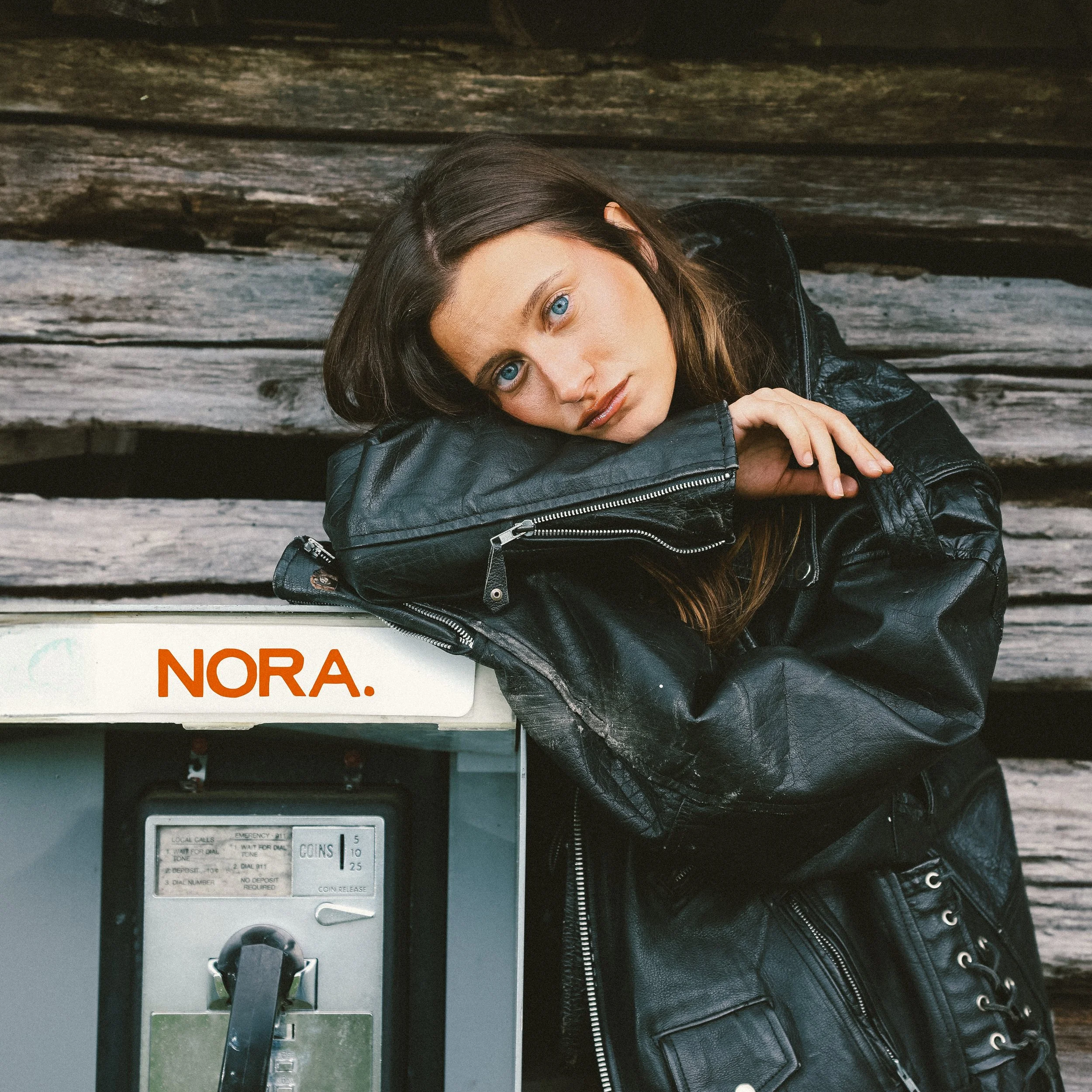
NORA.: INTERVIEW


by kristen case

photo by lindsey grace whiddon

With a sound that feels both luminous and grounded, NORA. creates music that lingers. Blending indie-pop textures with subtle country warmth, she writes with a rawness that mirrors the uncertainty, tenderness, and exhilaration of growing up. Just Words., her debut EP, captures that in-between phase of life where self-discovery, nostalgia, and release collide. Each song traces the emotional shifts that come with learning when to hold on and when to let go. We spoke with NORA. to talk about the brand new EP, her creative process, an unusual place to find inspiration for a song, and to what's next on the horizon. 

Congratulations on your new EP Just Words.! What emotions do you feel now that it is out there released?

NORA.: “Thank you so much! I’m feeling a mix of relief, excitement, and deep satisfaction. There’s relief in finally putting my music out into the world, excitement in knowing people will get to hear my heart, soul, and mind through these songs, and satisfaction in how proud and happy I am with how each track turned out.”

What are three words to describe your music to new listeners?

NORA.: “Self-deprecating, reflective, and self-assured.”

How did you approach Just Words. differently from your previous singles?

NORA.: “I approached this EP the same way I approach all of my songs by being completely truthful and writing straight from the heart. Every song is based on my own experiences. That’s what matters most to me when I’m songwriting; it feels like a diary I choose to make public.”

When it comes to sound selection and production for Just Words., what was the process for sound selection like and did you ever have a specific vision for what the song should sound like?

NORA.: “Honestly, with every song I sat down with my producer, Aden Gray, and my brother, Nick Suknaic, and talked through exactly what I was going for. Together, we collaborated to bring the picture I had in my mind to life. It’s funny looking back at the stripped-down versions from before recording, because they’re so different from where the songs ended up. Each track had an incredible amount of time and energy poured into shaping it into what it is today.

Aden Gray is especially talented in that way... before every song, he took the lead by asking the right questions and making sure we all truly understood where the song began and where it needed to end.”

What was the songwriting process like for Just Words.? Any unexpected moments or challenges making the EP?

NORA.: “The process was very similar to writing in a diary. Each song usually started with me alone in my room, sitting with a strong emotion... anger, sadness, falling for someone, or nostalgia. A little wine was usually involved too. From there, it was about letting everything out and being extremely honest with myself. It’s hard for me to leave things out; I want the songs to hold the whole truth.”

Each track on the album deals with such vulnerability and honest storytelling. How do you balance the evolution of artistry while staying true to yourself? What is your favorite song?

NORA.: “That’s a tricky question for me. I don’t always feel a disconnect between the two — there isn’t much shame in my game. If I feel something, it goes into the song. It’s all just very honest details from my life, and they’re not always pretty, but sometimes they are. I’m okay with being vulnerable because when other artists are, I’m so grateful for it. I love being able to relate to music, and you’d be surprised how much more alike we all are in the way we feel and process things. My favorite song is also tricky, but currently it's ‘The Hudson’ by The Favors!”

What's an unusual place you have found inspiration for a song?

NORA.: “An unusual place where I’ve found inspiration for a song is the back kitchen at my serving job. Working in customer service brings up a lot of emotions — for better or worse [laughs] — and sometimes those moments spark ideas I never expected.”

Is there any verse or lyric that holds a special meaning to you?

NORA.: “Truthfully, I’ve spent about half an hour pondering this question, and my answer is basically a whole album. With that said, you have to listen to A Grey Area by JP Saxe.”

What do you want fans to take away from Just Words. and your music as a whole ?

NORA.: “I hope people feel seen, understood, and a little less alone.”

What projects can we look forward to seeing from you in the future?

NORA.: “I’m writing nonstop, so hopefully an album is in my 2026 plans!”


FIND NORA. ONLINE

WEBSITE INSTAGRAM FACEBOOK


SAMI SITEMAN: INTERVIEW


by kristen case

photo courtesy of sami siteman

Sami Siteman is a force to be reckoned with. Sami is back to chat with us at Unclear about her latest single “Chasing the Rainbow.” She shares from such an honest place that it is really inspiring. Sami discusses the creative process behind “Chasing the Rainbow,” what she’s most proud of about the release, and the collaboration that brought it to life.

Welcome back! What have you been up to since we last talked? 

Sami: “I'm happy to be back! So much has happened for me in the past year both personally and professionally since we last talked! I got married, released the first single from my debut album, and have been hard at work on my debut album, called Welcome to My Brain! It's a collection of songs that I wrote in the ten year span between 2015-2025, all in some way related to mental health, and will be out mid-September 2026! I just released the second single from the album called ‘Chasing the Rainbow.’ So happy to be working on and releasing so much music this year!”

Congratulations on the release of “Chasing the Rainbow!” What emotions do you feel now that it is out there released?

Sami: “Thank you! I'm so happy to have this song out in the world! I wrote it back in 2020 and have actually played it live at shows for years, but to have it available for people to listen to on demand and hopefully connect with is so immensely special.”

How would you describe your music to new listeners?

Sami: “I always like to say that my music lives at the intersection of pop, country, and singer-songwriter with some rock, folk, and jazz elements sometimes thrown in! I have never felt like I fit squarely in one genre and that's the way I like it! Life is messy, it doesn't always fit into just one box, and neither do I. I think that fans of Sara Bareilles, Carly Pearce, Kelsea Ballerini, Olivia Rodrigo, Maren Morris, Noah Kahan, and Kacey Musgraves will really connect with my music and lyrics.”

How did you approach “Chasing the Rainbow” differently from your previous singles?

Sami: “My producer, Dylan Emmet, and I decided to make ‘Chasing the Rainbow’ a lot more acoustic than some of my more recent tracks. I really wanted the song to feel really intimate but still have some exciting instrumental elements, and I think we achieved just the right balance. Dylan is a genius and is always so amazing at translating my vision for my songs into a reality. Funny fact: Sometimes I like to be a little cheeky in my songs and add elements that are a dash on the nose, so if you listen really closely, you can actually hear some rain sounds in a few parts of the song.”

What was the songwriting process like for “Chasing the Rainbow?” Any unexpected moments or challenges?

Sami: “‘Chasing the Rainbow’ was one of those songs that really flowed out of me. The lyrics are truly very accurate: my favorite weather truly is right after it rains, but I absolutely hate rain. The song is quite literal in that I truly am always chasing the rainbow and don't want to sit through the rain, but it is also a metaphor for the way I naturally react to pain or discomfort in life in general — that I want to avoid it as much as possible and skip right to the happy things. So this song was really me trying to embrace the fact that you literally cannot get a rainbow or my favorite weather without the rain itself, and there is a freedom that comes with that realization; although I certainly wouldn't say I'm always perfect at remembering that lesson.”

“Chasing the Rainbow” could be the soundtrack to any movie. What would it be and why?

Sami: “Maybe it's just because it's one of my favorite movies, but I feel like it very well could have fit into the ending scene of How to Be Single with Dakota Johnson and Rebel Wilson when Dakota's character is hiking after having such a crazy year. To me, the song really feels like the moment when the rain clears and you realize that the hard stuff really makes the good stuff that much better.”

What has been your biggest piece of advice you have been given since the start of your musical journey? 

Sami: “I think one of the best pieces of advice I have ever heard on my music journey, and honestly I'm not even sure where I first heard it, is that the people who make it in music, who are successful (in whatever way you want to define that word), are the ones who never give up on it and never quit. They keep making music even when their metrics aren't encouraging or when they aren't making any profit from their music or when they've gotten 100 no's. They just keep doing it because they love it, because they feel the need to do it. That's truly how I feel about music, it's just a part of me, something I will never stop doing. And all I can hope for along the way is that my music can just keep reaching more and more people. Truly just connecting with as many people as possible who might benefit from or heal through my music is success to me.”

What are you most proud of upon the release, and what do you hope listeners take away from “Chasing the Rainbow?”

Sami: “I'm really proud of myself for being able to identify the coping pattern I have of trying to rush through discomfort and for calling it out in this song. If nothing more, I hope that people take away the message that life is so multi-faceted and as challenging as painful moments are, they really do make good moments shine so brightly. I am also really proud of the cover art on this one! I always create my own album/single artwork and use my own photography, but this one was especially fun for me! I really loved overlapping the two photos I took in Canva to create the raindrops layered over the rainbow.”

What's next for Sami Siteman? Any fun events or projects that fans should look forward to? 

Sami: “SO MUCH! I'm going to the Grammys for the first time this year thanks to my incredible manager Forbs West, so I am absolutely STOKED for that! I'm also co-writing more with/for other artists this year and that has been so much fun! As far as my artist project goes, Welcome to My Brain will be out mid-September, but in the meantime, I'll be releasing four more singles from the album! Some of them are really different from anything I have ever released before and I cannot wait for you to hear them! There also might be a mini tour announcement coming soon, so keep an eye out on my socials!”


FIND SAMI ONLINE

WEBSITE TWITTER INSTAGRAM FACEBOOK